A Complete Home Gym Under $500
A fixed ceiling cannot buy load, speed and range all at once — it buys two of the three. Here is the arithmetic that decides which two, and four builds that fit inside it, every item checked against the live listing.
This guide contains affiliate links. Buying through one costs you nothing extra and pays for the research. As an Amazon Associate I earn from qualifying purchases. How this site is funded →
You have a number in your head. It is not a large number, and you have already caught yourself apologising for it.
So you read the roundups, and every one of them opens above your ceiling. The recommendations assume a garage. The comparisons start at a rack. Somewhere in the comments there is always someone saying that if you are serious you will find the money, which is a sentence written by people who have already spent it.
Here is the part nobody says plainly: a fixed ceiling is not a worse version of a big budget. It is a different problem, with a different answer, and the answer is decided by arithmetic rather than by taste.
What this covers
Equipment you can put in a room you already live in: adjustable weight, elastic resistance, suspension straps, one machine. Above this sits the rack-and-barbell build, which cannot be done inside this ceiling honestly. Below it sits bodyweight training alone, which costs nothing and is a real answer for some people.
Every figure on this page comes from the manufacturers’ published specifications and the live retail listings, read on 28 August 2026. Where a number is ours, we say so.
A ceiling buys two of three things
Every piece of kit you are considering is really selling one of three things.
Load — how heavy it goes, and how far it can grow. Speed — how many seconds it takes to change the weight. Range — how many different movements it makes possible at all.
A large budget buys all three and nobody has to think about it. A fixed ceiling buys two, and the whole decision is which one you can afford to be short of. That is not a slogan; it falls out of two numbers.
Weight itself is the cheap part
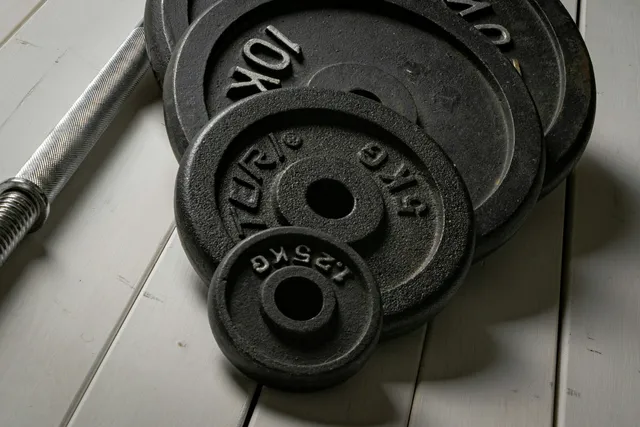
Start with the least glamorous fact in the category. Raw weight — iron, drilled, on a threaded bar — is close to the cheapest manufactured object in your house per pound.
Everything else in the aisle is that same iron plus a mechanism for changing how much of it is in your hand. And that mechanism, not the metal, is what you are actually buying.
Read the shape rather than the individual bars. It does not matter much whether the mechanism is a dial, a pin or a moulded shell: any device that changes the weight for you costs roughly two and a half times what the same weight costs on a screw thread.
That multiple is the entire budget problem in one number. Inside this ceiling you cannot pay it on everything, so you have to know what it buys.
What the multiple buys is seconds
Not comfort, and not quality. Seconds.
Around forty seconds to unscrew two collars, pull plates, rebalance both ends and screw them back down, against about three. Six changes in a session and the gap is close to four minutes. Across a year of training three times a week it is somewhere near nine hours.
Nine hours is a real cost and you should not wave it away. It is also not the reason people stop training — the reason is that the set-up cost of a session quietly rises until the session does not start. We took that apart in why home gym equipment goes unused, and it is the strongest argument for spending the multiple.
But the multiple is not binary, and this is the finding that decides the whole build. A pin-selector pair captures nearly all of that time saving for roughly half of what the fastest dial pair costs. A pin takes about five seconds against a dial’s three — our estimate, and not a difference you will ever feel mid-session. Half the outlay, inside a fixed ceiling, is a difference you feel immediately: it is straps or no straps.
The third thing the ceiling has to buy
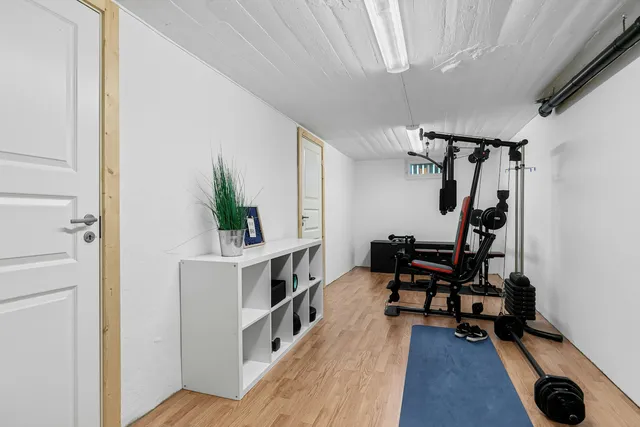
You can own a perfect pair of dumbbells and still be unable to train a pull, a hinge or anything overhead with load in a straight line. Weight is not the same as range.
This is where the cheapest items on the page do the heaviest lifting. A band set gives you resistance that no dumbbell can — horizontal pulling off a door, rotation, and a force curve that is hardest at lockout rather than at the bottom. We drew that curve and its limits in are resistance bands enough.
Suspension straps give you the rest: rowing at any angle you like, and pressing and hinging without a bench under you, which matters because the ceiling will not stretch to a bench as well. That trade is worked through in what the floor costs you.
Between them they take about a third of the ceiling, and the bands are a small fraction of that third. Nothing else on this page returns as much range for as little, which is why they sit in the builds below rather than being the thing you add later.
Four builds that fit
Load first. Bands, a screw-collar plate set, straps. It uses about half the ceiling, and the half left over is not decoration — plate sets scale, so the same money buys you more weight when you need it. You pay in minutes, every session, forever.
Balanced. Bands, a pin-selector pair, straps. About four fifths of the ceiling, and the fastest weight changes you can have while still owning something to pull on. Its ceiling is the load: this class of pair tops out well below what a plate set reaches.
Speed first. Bands and a dial-selector pair, and that is the whole list. It gives the highest load ceiling and the fastest changes on the page — and it eats the budget so completely that there is nothing left for straps. You are buying a very good pair of dumbbells rather than a gym.
Conditioning. Bands, plates and a bike, at a little over half the ceiling. This is the build for someone whose real gap is cardio, and it accepts slow weight changes to pay for it.
Three of the four leave the light end of the load range covered, which is the end that actually decides a purchase — the arithmetic for that is in how much weight you actually need.
The pick
For most people starting inside this ceiling, the balanced build is right, and the pin-selector pair is what makes it fit.
Best centre of a budget build
PowerBlock Sport 24
- Range
- 3–24 lb per hand
- Increment
- 3 lb
- Adjustment
- Magnetic pin
- Warranty
- 5 yr residential
What we like
- A magnetic pin rather than a dial — our estimate is about five seconds a change, against three
- Costs roughly half what the fastest dial pair costs, which is what leaves room for straps and bands
- 3 lb steps from 3 lb, so the light end of the range is properly covered
- Sold and shipped by Amazon, so returns run through Amazon rather than a third party
What we don't
- Tops out at 24 lb per hand — if you already press more than that, this is the wrong end of the trade
- Not expandable: the Sport line does not take add-on kits the way the Elite and Pro lines do
- Owner reports converge on the plastic selector as the part that fails
- Ranked from 632 ratings, a far thinner base than the bands or the straps in this build
Read that load ceiling carefully before you order. Twenty-four pounds per hand is plenty for pressing, rowing and every accessory movement for a long while; it is not plenty for goblet squats or single-leg work if you have been training for a couple of years. If that is you, the trade inverts and the plate set wins.
The field
| Product | Load on hand | Best for | Buy |
|---|---|---|---|
| PowerBlock Sport 24Our top pick | 3–24 lb per hand | The centre of the build: most of the speed, for roughly half the outlay | Check price → |
| WHATAFIT Resistance Bands Set | Up to 150 lb stacked | Range no dumbbell gives you, for a fraction of anything else here | Check price → |
| TRX GO Suspension Trainer | Rated to 700 lb | Pulling and hinging with no bench and no anchor in the wall | Check price → |
| Yes4All Spinlock Set | 40–200 lb of plate | Open-ended load when the ceiling matters more than the minutes | Check price → |
| BowFlex Results Series SelectTech Dumbbells | 5–52.5 lb per hand | The highest load and the fastest changes — at the cost of everything else | Check price → |
| BowFlex SelectTech 840 Kettlebell | 8–40 lb | Conditioning and hinging in one floor tile | Check price → |
| pooboo Magnetic Belt-Drive Bike | 350 lb capacity | Cardio inside the same ceiling, if you drop the selectorised pair | Check price → |
You are starting from nothing and want the most gym for the ceiling
Buy the three-item balanced build in one go: the pair, the straps, the bands. It covers push, pull, hinge and carry from the first session, and it leaves about a fifth of the ceiling for a mat and a door anchor.
See the pin-selector pair See the TRX listingYou already lift heavier than a light pair can hold
Then speed is the thing to be short of, not load. Plates and collars, plus the leftover to buy more plate as you need it. Check the variant wording before you pay — the sizes on these listings are stated as a total across both handles, not per hand, and readers lose money on that line more often than on any other.
See the plate set See the band setThat listing trap is the subject of its own guide: are adjustable dumbbells sold in pairs.
You want the changes instant and you will not use straps
The dial pair is the best pair of dumbbells here on both load and speed, and it takes the ceiling with it. Buy it knowing that bands are all you will have left, and that this is a dumbbell purchase rather than a gym.
See the dial pair See the band setYour real gap is cardio, not strength
Then the pair is the wrong place for the money. Plates keep the load honest and cheap, and the machine takes the share that would have gone on the mechanism.
See the bike listing See the kettlebellBefore you order a bike, read cardio in a flat without a treadmill: it is quiet in the room and not necessarily quiet in the flat below.
What breaks, and who fixes it
The selector, on any selectorised pair. Not the weight, not the handle. Owner reports across this whole category converge on the part that decides which plates come with you, and on the pin-selector pair here that part is plastic. This is the same failure pattern we found across the category in what breaks on adjustable dumbbells.
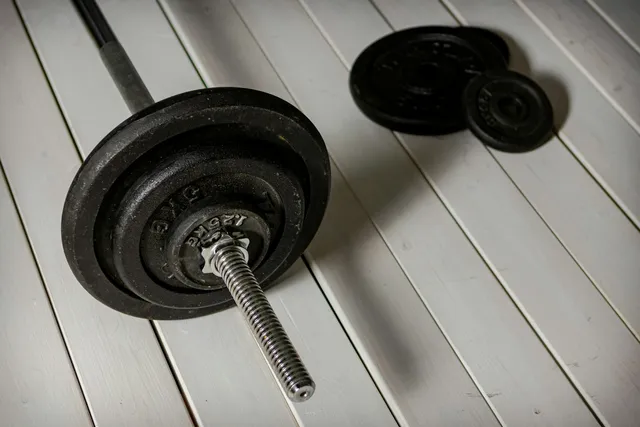
The threads, on a plate set. Collars cross-thread if you rush them, and a stripped collar is the whole handle. They cost almost nothing to replace, which is the quiet advantage of the cheap option — nothing on it is a proprietary part.
The bands, at the anchor. Elastic fails at the point where it is clamped, not in the middle. Inspect the sleeve where the band meets the carabiner, and retire a band that shows fibres rather than waiting for it to go mid-rep.
Who you send it back to matters. Of the items here, the pin-selector pair, the dial pair and the kettlebell are sold and shipped by Amazon. The straps are sold by the brand, the band set by the brand’s own storefront, and the bike by a third-party seller. Returns and warranty claims run through whoever sells it, not through Amazon.
Before you order
- Count what you can already lift for ten reps, in one movement, today. If it is well over what a light pair holds, the balanced build is the wrong build for you.
- Open the door you would anchor to. A door anchor goes over the hinge side and needs a door that shuts fully and opens away from you. Some flats do not have one.
- Stand where the weights will live and put a bag there. If it is somewhere you have to move something to reach, the set-up cost has already started.
- Measure the route in, not just the room. A crated bike is the item most likely to fail on a stair landing, and its listed shipping weight is often a placeholder.
- Read the variant line twice on any plate set, then read it once more. Total weight and per-hand weight are the same sentence on most of these listings.
Questions people ask
Is a rack and barbell possible inside this ceiling? Not honestly. You would be buying the cheapest example of each of four things, and the one that fails is the one holding a loaded bar over you. The comparison is in adjustable dumbbells or a barbell.
Should I buy everything at once, or build up? Build up, in an order where nothing becomes redundant — that sequence is the first 90 days. The one thing worth buying immediately is the cheapest: bands cost a fraction of everything else and are useful in every build here.
Is second-hand a better answer at this ceiling? Often, for plates specifically, because iron does not wear out and nothing on a plate set is proprietary. It is a worse answer for selectorised pairs, where the failure part is the mechanism and you cannot inspect its history.
Why not the cheaper strap kits? Because they sit on a few hundred ratings. This site ranks on the volume of owner reporting, and a few hundred reports is not a sample worth ranking from.
What if I have almost none of this ceiling? Bands alone, and the floor. It is not a compromise build in the way it sounds — it covers more movements than a light dumbbell pair does, and it fits in a drawer.
Load-per-pound ratios are arithmetic on the listing prices and published load ranges read on 28 August 2026, given as ratios because we do not display prices. Per-session time figures are our estimates, on roughly six weight changes in a session; the yearly totals are arithmetic on top of them. The share each build spends of the ceiling is rounded to the nearest twentieth on purpose. Specifications are the manufacturers’ published figures and the live listing fields; the band set, the straps and the bike are each sold by a third party rather than by Amazon, and returns run through them. We do not buy or use this equipment — everything here is ranked from aggregated owner reporting and from figures we can check. We have deliberately not recommended a rack, a barbell, a bench or a mat, because none has been verified. If something here stops matching, tell us and we will correct it. More on the method in how we research, and more of the same in Strength Equipment.
Specifications here are checked against the live listing on the date shown, and figures we derive ourselves are labelled where they appear.
How we research →