Adjustable Dumbbells or a Barbell? The Honest Comparison for a Small Room
The two routes are usually argued on which builds more strength. In a small flat that is the least useful question. Here are the six axes that actually decide it — space in use, noise, ceiling, safety, cost per pound and what happens when you move.
This guide contains affiliate links. Buying through one costs you nothing extra and pays for the research. As an Amazon Associate I earn from qualifying purchases. How this site is funded →
Every version of this argument you have read was written by someone with a garage.
That is not a cheap shot — it is the whole problem. If floor space is free, the barbell wins on almost every axis and the discussion is short. Take the space away and five of the six axes flip, which is why the answer for a spare bedroom is genuinely different from the answer everyone else gives.
So this is not “which is better”. It is: which one survives contact with your room.
The two numbers that actually differ
Strip out preference and you are left with two measurements that pull against each other.
A pair of adjustable dumbbells needs about ten square feet while you are using them. A barbell setup needs roughly four times that, because a seven-foot bar has to clear the uprights and you have to walk it out.
In exchange, the dumbbells stop at 52.5 lb per hand and the bar does not stop at all.
If your room can spare 43 square feet, buy the bar. That is the honest headline, and most of this guide is about what to do when it cannot.
Axis by axis
1. Space while training, not space when stored
This is where people miscalculate. Both routes store small — a folding rack goes flat, dumbbells go under a sofa. It is the space in use that separates them, and that is the figure no listing gives you.
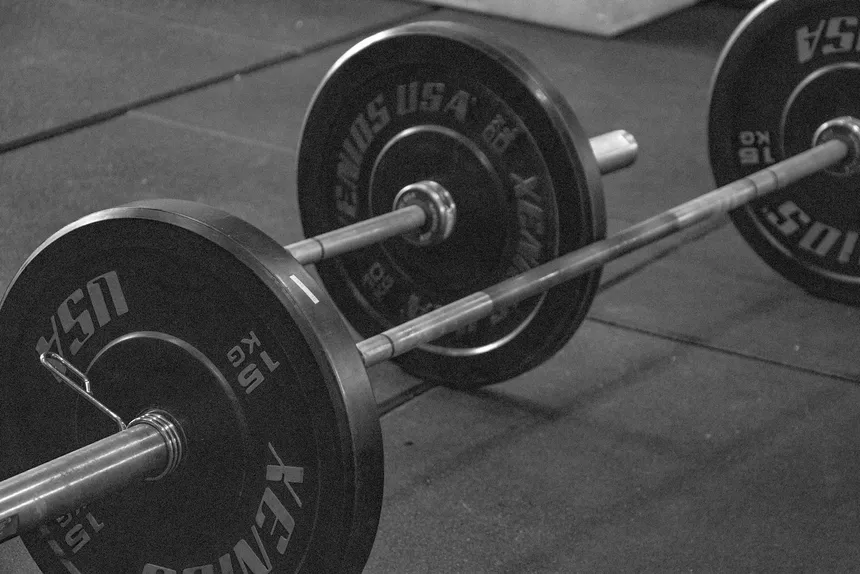
Dumbbells need room for your arms. A bar needs room for the bar, plus a walk-out, plus somewhere for the plates you are not currently using.
2. Noise, which decides it in a flat
A barbell setup is loud in a way dumbbells are not, and not for the reason people assume. It is not dropping the bar — nobody drops a bar in a bedroom. It is the small, constant noise: plates sliding onto a sleeve, collars clicking, the bar settling into the hooks, and plates being stacked and restacked between sets.
Adjustable dumbbells make one noise, once per change, and a dial set makes almost none.
If there is a person under your floor, this axis outweighs everything else. We went through the mechanics of why in the apartment noise guide.
3. The ceiling, which arrives later than you think
A bar has no ceiling. That is real, and for squats and deadlifts it is the whole argument — 52.5 lb per hand is a number a determined person passes inside two years of lower-body training.
For pressing, rowing and every accessory movement, most people never get near it. The honest version is that the ceiling matters enormously for two lifts and barely at all for the other twenty.
4. Safety without a spotter
This is underweighted in every comparison and it should not be.
A failed dumbbell press ends with you putting the weights down beside you. A failed barbell bench press ends with a loaded bar on your chest, and in a room by yourself that is the genuine risk of the barbell route. Safety pins in a rack solve it — which means the rack is not optional, which means the space figure above is not optional either.
5. Cost per pound, which favours the bar and misleads anyway
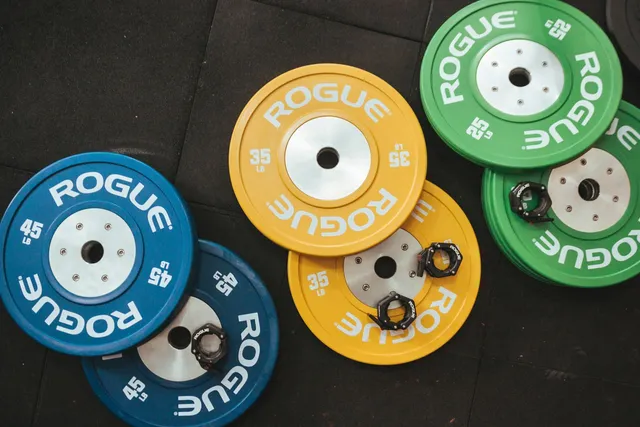
Plates are the cheapest weight you can buy. A bar and a stack of plates costs less per pound than any adjustable dumbbell, by a wide margin, and that gap grows as you add weight.
It misleads because the rack, the bench and the floor protection are not optional extras — they are what makes the plates usable. Compare complete setups, not components.
6. What happens when you leave
A bar and plates are heavy, awkward to move, and hold their value well on the second-hand market. A rack usually needs unbolting from a wall you were probably not allowed to drill in the first place — the constraint we built the no-drilling guide around.
Dumbbells go in a car boot.
What to buy for a small room
| Product | Load ceiling | Best for | Buy |
|---|---|---|---|
| BowFlex Results Series SelectTech DumbbellsOur top pick | 52.5 lb per hand | Highest ceiling here, and the fastest change | Check price → |
| Core Fitness Adjustable Set | 50 lb per hand | A dial alternative when the BowFlex is out of stock | Check price → |
| PowerBlock Sport 24 | 24 lb per hand | Smallest footprint and the finest steps | Check price → |
| Yes4All Spinlock Set | Up to 200 lb total | Closest thing here to plates, with the same slowness | Check price → |
If you are choosing dumbbells because the room decided for you, buy the highest ceiling you can justify. That is the BowFlex.
Best dumbbell route when a bar will not fit
BowFlex Results Series SelectTech Dumbbells
- Range
- 5–52.5 lb
- Increment
- 2.5 lb to 25 lb
- Adjustment
- Dial, ~3 sec
- Replaces
- 15 pairs
What we like
- 52.5 lb per hand postpones the ceiling longer than anything else here
- 2.5 lb steps up to 25 lb, where the small movements live
- Dial change in about three seconds, which keeps supersets intact
- No spotter needed, ever — a failed rep ends beside you, not on you
What we don't
- The cradle is moulded plastic and owners report it flexing
- Two units plus two cradles is a real amount of floor
- Costs several times what the equivalent plate weight would
- The predecessor model is under a CPSC recall — buy by the full current name
The spinlock set is the closest thing to plates in this list, and it comes with the closest thing to a barbell’s tax: about forty seconds per change.
See the spinlock listingBefore buying either, two five-minute reads: what breaks on them and whether the listing sells one or two.
When the barbell is genuinely the right answer
Buy the bar, and accept the space, if any of these is true:
- You want to squat or deadlift heavy. Nothing dumbbell-shaped substitutes for this. The loading is the point and the loading has no ceiling.
- You have 43 square feet you can dedicate, not borrow from a living room twice a week.
- You are allowed to fix a rack, or you have room for a freestanding one.
- You already train seriously and know the ceiling matters to you specifically, rather than in the abstract.
We have not verified a barbell, rack or plate set against a live listing, so this guide does not recommend a specific one. When it does, it will say what was checked and when — the same as everything else here.
Questions people ask
Can dumbbells build as much muscle as a barbell? For most people, for most muscles, yes — the research on this is not close. What the bar does better is load the legs and back heavily enough to keep progressing once you are strong.
Is a barbell dangerous at home? Only bench pressing without safety pins, and that one is genuinely dangerous alone. Everything else is a matter of technique and sensible loading.
What about a shorter bar? A 5 ft or 6 ft bar solves some of the width problem and reduces the load capacity and the stability. It is a real middle option, and we have not verified one.
Should I buy both eventually? Most people who train for years end up with both. The question this guide answers is which one first, and in a small room the answer is almost always the dumbbells.
Does a folding rack solve the space problem? Partly. It folds to a few inches of wall, but the space you need while lifting does not fold, and that is the number in the chart above.
The floor area figures are our estimates, derived on the same basis as the all-in-one guide and labelled as such wherever they appear — no manufacturer publishes a working envelope. Dumbbell specifications are the manufacturers’ published figures, read from the live listings on 27 August 2026. We have deliberately not recommended a barbell, rack or plate set, because none has been verified. We do not buy or use this equipment. If something here stops matching, tell us and we will correct it. More on the method in how we research, and more in Strength Equipment.
Specifications here are checked against the live listing on the date shown, and figures we derive ourselves are labelled where they appear.
How we research →