Why Home Gym Equipment Goes Unused, and the Four Purchases That Prevent It
It is almost never motivation. It is a forty-second weight change, a machine that has to be unfolded, and kit that lives where you have to move it first. Here is the friction, costed in minutes, and what to buy instead.
This guide contains affiliate links. Buying through one costs you nothing extra and pays for the research. As an Amazon Associate I earn from qualifying purchases. How this site is funded →
The equipment is not in a landfill. It is in the spare room, under a coat, three feet from where you are sitting.
That is the part people find hard to explain to themselves. You spent the money because you wanted the outcome, you still want the outcome, and the thing is right there. So the story becomes about willpower, and willpower is a story that ends with you feeling worse and buying nothing.
It is usually not willpower. It is a handful of small, repeated frictions that each cost thirty seconds and together cost you the session.
What the friction actually costs
Every setup taxes you before the first rep. The size of that tax varies enormously between things that look, on a product page, like near-identical purchases.
Ten hours a year threading collars is not the reason you quit. It is the reason the last weight change of the session does not happen, and then the session ends early, and then the sessions get shorter, and then they stop.
Friction does not make you quit. It makes each session slightly worse, forever, until the habit loses to something easier.
The four frictions, in the order they kill things
1. The setup ritual
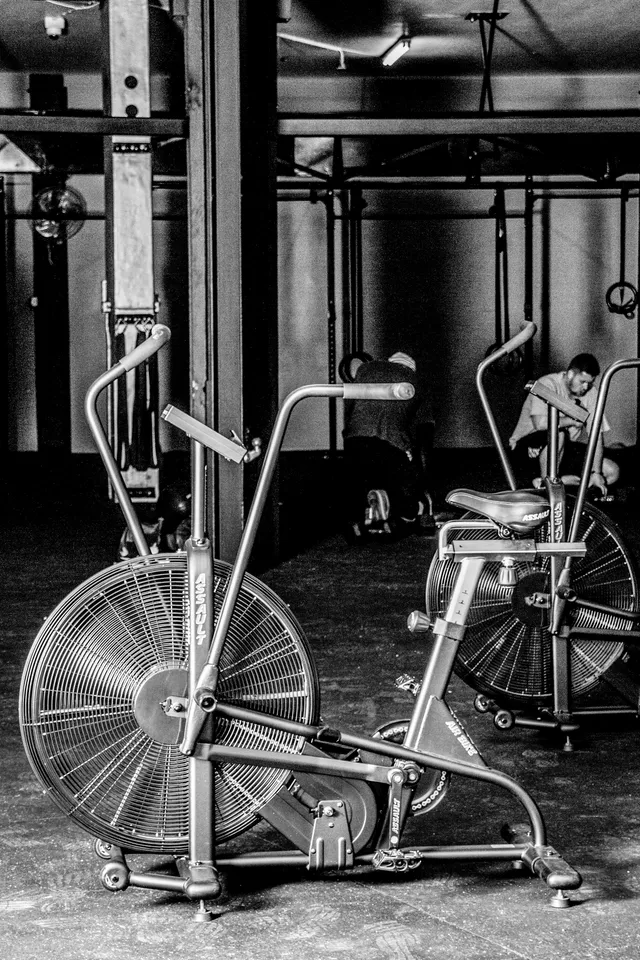
Anything that must be unfolded, wheeled out, or assembled before use gets used on the days you already feel like training — which are the days you did not need help.
This is the quiet flaw in folding equipment, and it is not a manufacturing defect. A machine that folds from four feet of depth to fifteen inches is genuinely clever. It also weighs 172 lb on wheels, and the ritual of unfolding and refolding is a real cost that no spec sheet lists.
If the room is yours alone, you will leave it out and the problem disappears. If the room is shared and the machine has to fold, be honest with yourself about how many evenings you will do that.
2. The weight change
Forty seconds does not sound like anything. Run six weight changes in a session and it is four minutes of standing still, and — worse — it is four moments where the session stops having momentum.
This is why dial-adjust dumbbells outsell screw-collar sets many times over despite costing several times more. People are not paying for engineering. They are paying to not stop.
The full comparison of adjustment mechanisms, including which parts fail, is in what breaks on adjustable dumbbells.
3. The thing you must move first
If training requires clearing the floor, moving a chair, or shifting the drying rack, the session starts with a chore. Chores are where intentions die.
The fix is spatial rather than financial: pick the corner before you buy, mark it with tape, and buy only what fits in it permanently. Equipment that lives where you train gets used. Equipment that lives somewhere else gets used when you are already motivated.
4. The noise you are apologising for
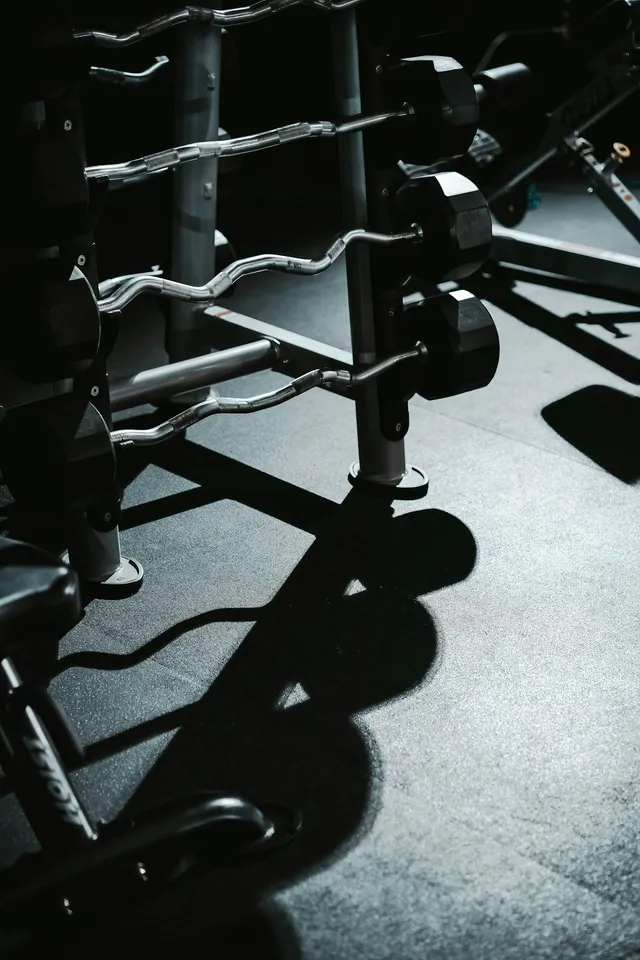
Training tentatively is a slow quit. If every set has you listening for footsteps overhead, or lowering a dumbbell in slow motion so it does not land, the session is worse than it looks on paper — and you will find reasons to skip it.
This is the friction people are least likely to name out loud, and it is often the strongest. We covered the mechanics — impact into the structure versus airborne sound — in the apartment noise guide.
What actually survives contact with a real week
Ranked here by how little they ask of you before you start.
| Product | Setup cost | Best for | Buy |
|---|---|---|---|
| TRX GO Suspension TrainerOur top pick | Hook it on a door | Nothing to move, nothing to unfold, nothing to hear | Check price → |
| WHATAFIT Resistance Bands Set | Out of a drawer | Zero noise and zero setup — the lowest bar there is | Check price → |
| BowFlex Results Series SelectTech Dumbbells | ~3 sec per change | The dial is what you are paying for | Check price → |
| PowerBlock Sport 24 | Pin, a few seconds | Small enough to live where you train | Check price → |
| BowFlex SelectTech 840 Kettlebell | Pick it up | One object, one floor tile, no assembly | Check price → |
| Yes4All Spinlock Set | ~40 sec per change | Cheapest to buy, most expensive in minutes | Check price → |
The purchase with the least friction of anything here
Lowest barrier between you and a set
TRX GO Suspension Trainer
- Weight
- 0.68 kg
- Rated to
- 700 lb
- Anchor
- Door anchor included
- Impact load
- None
What we like
- 0.68 kg — it lives on a hook, not on your floor
- Anchors over a door in seconds, with nothing to assemble
- Difficulty changes by moving your feet, so there is no weight change at all
- Silent, which removes the friction people are least willing to admit to
What we don't
- Bodyweight only — it will not replace loaded pressing
- Needs a door that closes away from you
- The angles take a couple of sessions to learn
- Easy to under-load once you are stronger
If you want load without the tax
The dial mechanism is the single most effective anti-friction purchase in this category, and that is the honest reason it costs what it costs.
See the BowFlex listing See the PowerBlock listingIf you already own the wrong thing
You do not need another purchase. You need to remove one friction at a time.
- Leave it out. If the folding is the problem and the room allows it, stop folding. The aesthetic cost is real; the training cost of folding is higher.
- Move it to where you train, even if that room is not the tidy answer.
- Pre-set the weight at the end of a session for the first movement of the next one. It sounds trivial. It removes the first stop.
- Buy the mat before the next machine. If noise is the friction, this is the cheaper fix.
- Sell the thing with the highest tax. A screw-collar set that costs you ten hours a year is worth less to you than what it would fetch.
Questions people ask
Is this not just a motivation problem? Motivation decides whether you start in January. Friction decides whether you are still going in March. They are different problems and only one of them can be bought.
Does expensive equipment get used more? Not because it is expensive. It gets used more when it removes a step — which is usually what the extra money bought.
What is the single most abandoned category? Cardio machines, by a distance, and the reason is structural: they are large, single-purpose, and cannot be put away. Buy one last, once the habit is proven, not first.
Should I buy less than I can afford? For the first three months, yes. The first 90 days sets out the order that works.
The per-session friction figures are our estimates derived from how each mechanism works, not measurements of any individual, and the annual totals are arithmetic on top of those estimates. Adjustment times reflect the mechanisms as described by their manufacturers. Product figures are the manufacturers’ published specifications, read from the live listings on 27 August 2026. We do not buy or use this equipment; picks are ranked from aggregated owner reporting. If a figure here stops matching, tell us and we will correct it. More on the method in how we research, and more in Strength Equipment.
Specifications here are checked against the live listing on the date shown, and figures we derive ourselves are labelled where they appear.
How we research →