Do You Need a Weight Bench? What the Floor Costs You
A bench is the first thing every home gym list tells you to buy and the first thing that will not fit. Here is exactly what training on the floor removes, what it does not, and when to give in and buy one.
This guide contains affiliate links. Buying through one costs you nothing extra and pays for the research. As an Amazon Associate I earn from qualifying purchases. How this site is funded →
The dumbbells fit under the sofa. The bands live in a drawer. The bench is four feet of steel and padding that has to stand somewhere, all week, being a bench.
That is the item that turns a flat into a gym, visually, and it is the one most people quietly decide against. Then they read that you cannot train properly without one and buy it anyway, or give up.
Neither is right. Here is what the floor actually takes from you.
The geometry, which is smaller than you think
A press on the floor ends when your elbow reaches the ground. On a bench, your torso is raised, so the elbow keeps travelling before the shoulder runs out.
That missing portion is real, and it is worth being precise about what it costs: the deepest part of a chest press, the stretch under load at the bottom of a fly, and the ability to set a decline or incline angle at all.
What it does not cost you: the top three quarters of every pressing movement, all pulling, all squatting, all hinging, all carrying, and every single-arm variation.
What still works on the floor
More than the internet suggests.
Floor press. The bottom stop is a feature for some people — it removes the shoulder position most likely to aggravate an old injury, and it makes the lockout the hard part.
Single-arm everything. Rows, presses and carries do not need a bench, and unilateral work is where small dumbbells earn their keep. This is also the training that suits a set with a modest top end.
Hip work from the floor. Glute bridges and hip thrusts with a dumbbell across the hips run fine without a bench, at the cost of some range.
Everything hanging. A suspension trainer turns a door into the anchor a bench cannot provide, and covers rows and chest work at angles the floor cannot.
See the TRX listingWhat does not, and what to do instead
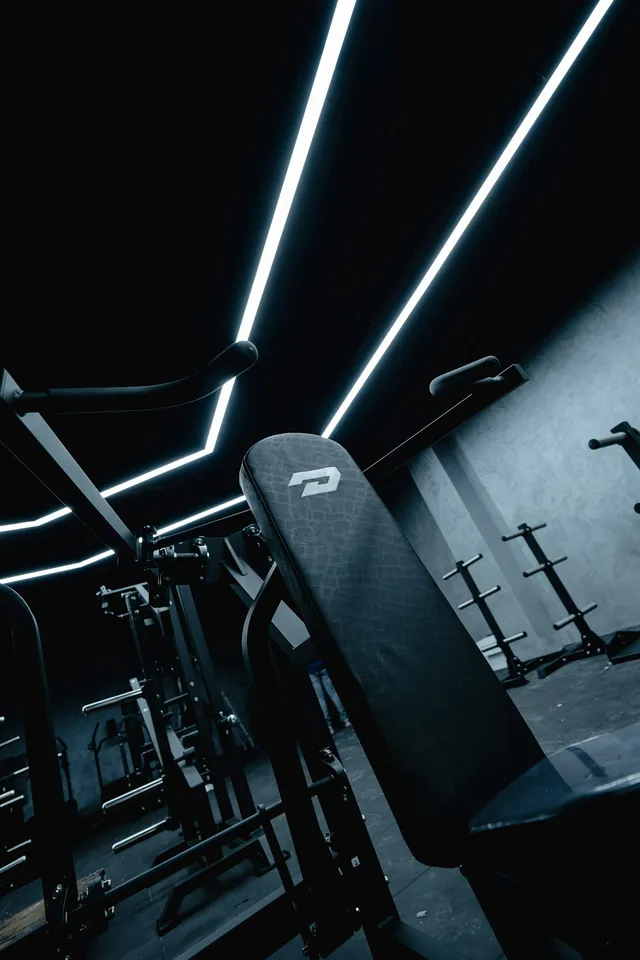
Incline and decline pressing. There is no floor substitute for an angle. If you want upper chest specifically, this is the argument for buying a bench, and it is a good one.
Deep flies. The floor stops the arc early. Bands solve this differently — resistance rises as you close, which loads the top of the movement rather than the bottom.
Bulgarian split squats and step-ups. These need a raised surface, not a bench specifically. A sturdy chair or a low table works, and costs nothing.
Seated pressing with a back support. A wall works for the light end. Beyond that, the bench is doing something you cannot fake.
Notice the pattern: the floor removes ranges, not movements. Almost everything has a version that survives.
What to buy while you have no bench
Nothing on this page is a bench, because a bench is not what makes this setup work. What makes it work is load you can adjust finely and an anchor for pulling.
| Product | What it replaces | Best for | Buy |
|---|---|---|---|
| TRX GO Suspension TrainerOur top pick | The pulling angles | The single best no-bench purchase | Check price → |
| PowerBlock Sport 24 | Fine load, small box | Single-arm work, where fine steps matter most | Check price → |
| WHATAFIT Resistance Bands Set | The top of the arc | Flies and presses the floor cuts short | Check price → |
| BowFlex Results Series SelectTech Dumbbells | Heavier floor pressing | When the floor press stops being hard | Check price → |
Best buy before a bench
TRX GO Suspension Trainer
- Weight
- 0.68 kg
- Rated to
- 700 lb
- Anchor
- Door anchor included
- Impact load
- None
What we like
- Hangs off a door, so it needs no floor space at all when stored
- Covers rows and chest at angles the floor cannot reach
- You set the difficulty by moving your feet, so it scales without plates
- 0.68 kg, which matters if the flat is up several flights
What we don't
- Bodyweight only — it will not replace heavy pressing
- Needs a door that closes away from you, or a solid anchor point
- Learning the angles takes a couple of sessions
- It is not a bench, and it does not pretend to be
If you are choosing dumbbells to go with this, the step size matters more than the top number — we set out the arithmetic in how much weight you actually need. And if you are furnishing a rented flat, the no-drilling build covers the whole room.
When to give in and buy one
Buy the bench when one of these is true, and not before:
- You specifically want upper chest. Incline has no floor substitute.
- Your floor press has stopped being hard at the top of your dumbbell range.
- You have somewhere to put it that does not require moving it before and after every session. A bench you relocate twice a day becomes a bench you stop using.
- You are past the beginner window and adding range matters more than adding consistency.
Until then the bench is furniture that is also equipment, and in a small flat that is the wrong way round.
Questions people ask
Is the floor press worse than the bench press? Different, not worse. It removes the deepest range, which reduces the stretch under load — a loss for chest development, sometimes a gain for cranky shoulders.
Can I use my sofa or bed? For hip work and step-ups, yes. For pressing, no: both are too soft to keep your shoulders stable, and unstable pressing under load is how people get hurt.
What about the exercise ball everyone suggests? It gives you the angle and takes away the stability you need to press heavy. Fine at light loads, wrong as a bench substitute.
Is a folding bench a good compromise? Often yes, and it is the honest answer to a small room. We have not verified one against a live listing yet, so we are not recommending a specific model rather than guessing at one.
The range-of-motion comparison above is geometric reasoning presented as a schematic, not a measurement of any individual — limb lengths change where the floor stops you. Product figures are the manufacturers’ published specifications, read from the live listings on 27 August 2026. We do not buy or use this equipment, and picks are ranked from aggregated owner reporting. If something here stops matching, tell us and we will correct it. More on the method in how we research, and more in Strength Equipment.
Specifications here are checked against the live listing on the date shown, and figures we derive ourselves are labelled where they appear.
How we research →