The First 90 Days of a Home Gym: What to Buy, In What Order, and What to Skip
Most home gyms are bought in one afternoon and abandoned by March. Here is the same money spent in three stages instead of one, what each stage actually unlocks, and the purchases worth delaying until you know you will keep going.
This guide contains affiliate links. Buying through one costs you nothing extra and pays for the research. As an Amazon Associate I earn from qualifying purchases. How this site is funded →
The mistake is not buying the wrong thing. It is buying everything on the same afternoon.
You decide on Sunday that this year is different, you spend an evening reading comparisons, and by Tuesday there is a rack, a bench, a bar, a set of dumbbells and a mat in the spare room. Six weeks later most of it is a clothes horse, and the part that hurts is that you were right about wanting to train. You were just wrong about the order.
The order matters more than the products, and almost nobody writes about it, because writing about the order means telling you not to buy things yet.
Why the order is the whole problem
Two things are true at once when you start, and they pull in opposite directions.
The first: you genuinely do not know what you will stick with. Not because you lack discipline — because nobody knows, in week one, whether they will end up someone who trains at 6am before work or someone who needs a class and other people. Buying for the version of you that trains four days a week is buying on a guess.
The second: buying too little is also a way to quit. If the kit cannot load a movement hard enough to produce a result, you stop seeing progress, and stopping follows.
The way through is to buy in stages where each stage is useful on its own and none of it becomes redundant when the next stage arrives. That is a much stronger constraint than it sounds, and it eliminates most of what beginner lists recommend.
Weeks 1 to 4: buy the thing that cannot become redundant
Start with bands and a suspension trainer. Together they cost a fraction of a dumbbell set, they anchor to a door, and they cover pressing, rowing, squatting to bodyweight and every hinge pattern.
They are also the only things on this page that stay in the rotation forever. When you own dumbbells, the bands become your warm-up and your travel kit. When you own a rack, they are still your warm-up. Nothing here gets replaced — it gets demoted, which is different.
What you can actually train
Everything, at the loads a beginner needs. That sentence annoys people who have been training for years, and it is still true: for someone in their first month, bodyweight rows and band presses produce the same adaptation as a loaded barbell would, because the limiting factor is not load. It is coordination, connective tissue and turning up.
What you cannot
Progressive overload past a point. Band resistance rises through the range, so the bottom of a press stays easy no matter how heavy the band. That ceiling is real, it arrives somewhere around week six for most people, and it is exactly what stage two is for.
Best first purchase, full stop
WHATAFIT Resistance Bands Set
- Bands
- 10, 20, 30, 40, 50 lb
- Stacked
- Up to 150 lb
- Includes
- Door anchor, ankle straps
- Impact load
- None
What we like
- Stacks to 150 lb and includes the door anchor
- Nothing drilled, nothing dropped, nothing your neighbour hears
- Stays useful for warm-ups and travel long after you outgrow it
- Cheap enough that quitting costs you almost nothing
What we don't
- Resistance curve means the bottom of a press stays easy
- Latex perishes — treat it as a consumable
- Hard to load a squat meaningfully
- The door anchor needs a door that opens away from you
Weeks 5 to 8: add load, once you have proved the habit
If you have trained more or less consistently for a month, buy dumbbells. Not before — a month is the cheapest possible test of whether this is a thing you do.
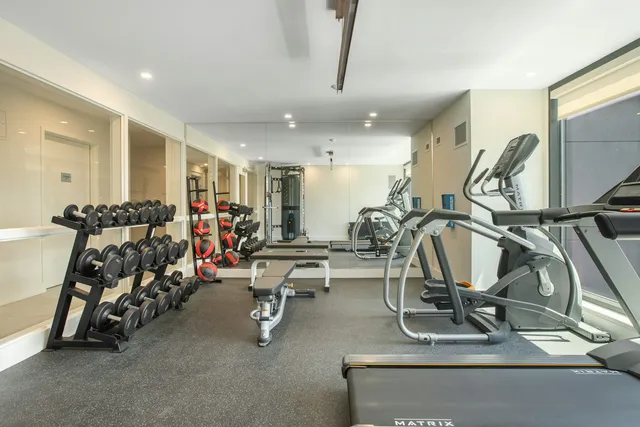
This is the purchase that changes what is possible. Loaded pressing, rows that get heavier every fortnight, and every accessory movement that keeps shoulders and elbows healthy — none of it happens properly on bands.
It is also the purchase people get wrong most expensively, in three specific ways:
They buy for the top number. The range you will use most is the bottom third, and the step size down there decides whether the small movements progress at all. We set out the arithmetic in how much weight you actually need — the short version is that a 5 lb jump is a 50% increase at 10 lb and nobody trains that way on purpose.
They buy one dumbbell by accident. Several manufacturers list the single unit and the pair separately, at half the price and with an almost identical page heading. That trap has its own guide: are they sold in pairs.
They ignore the mechanism. The plates never fail. The selector does, and in 2025 that produced a recall of nearly four million units. What breaks on adjustable dumbbells covers it.
Best second purchase for most people
PowerBlock Sport 24
- Range
- 3–24 lb per hand
- Increment
- 3 lb
- Adjustment
- Magnetic pin
- Warranty
- 5 yr residential
What we like
- 3 lb steps throughout, the finest at the light end of any set here
- A pin through a block — fewest parts of the three mechanisms
- Two small blocks rather than one long crate, which matters on stairs
- Five-year residential warranty
What we don't
- 24 lb per hand is a real ceiling you will meet on presses
- Not expandable, unlike the larger models in the range
- Selector pin is plastic, and owners say so
- Both ends must click or the dumbbell swings
If you already press more than 24 lb per hand, skip straight to the dial set and accept the larger footprint.
See the BowFlex listingWeeks 9 to 12 and beyond: add the thing you keep skipping
By month three the pattern is visible. You know which days you train, which movements you avoid, and whether the room works.
This is when conditioning is worth buying, and not before — because conditioning equipment is the most abandoned category in home fitness, and buying it in week one is how it earns that reputation.
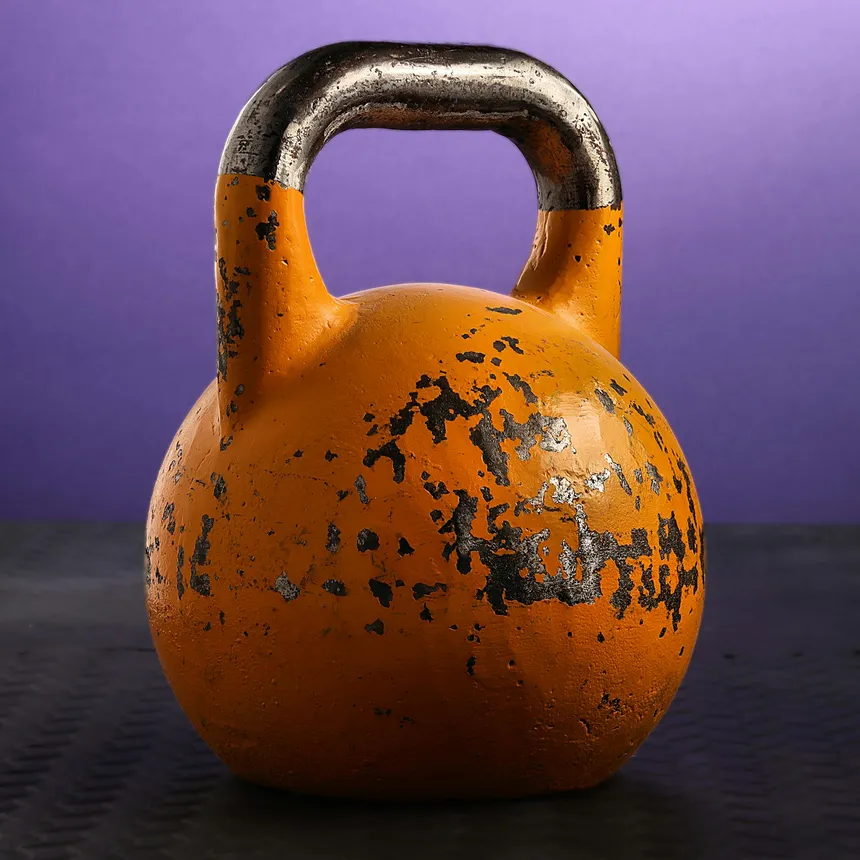
A kettlebell if you want conditioning that shares the floor with everything else and takes up one tile. Read the noise warning honestly: quiet for presses and carries, and a dropped swing is the loudest thing you can do in a flat.
A bike if you will genuinely use it and the floor below you allows it. It is one long crate, it is the item most likely to fail the stair test, and its listed shipping weight is the least trustworthy figure on this page — we went through both problems in the upstairs guide.
See the kettlebell listing See the bike listingThe full picture
| Product | Buy it when | Best for | Buy |
|---|---|---|---|
| WHATAFIT Resistance Bands SetOur top pick | Day one | Nothing else is this useful for this little | Check price → |
| TRX GO Suspension Trainer | Day one | Covers the pulling that bands do worst | Check price → |
| PowerBlock Sport 24 | After a month of turning up | Real load, finest steps, smallest boxes | Check price → |
| BowFlex Results Series SelectTech Dumbbells | After a month, if you press heavy | Higher ceiling, faster changes, bigger cradles | Check price → |
| BowFlex SelectTech 840 Kettlebell | Month three | Conditioning that shares the floor | Check price → |
| pooboo Magnetic Belt-Drive Bike | Month three, if at all | Cardio, if the floor and the stairs allow it | Check price → |
What to skip, and for how long
A bench, for now. It is the first thing every list recommends and the first thing that will not fit. The floor removes ranges, not movements — we took that apart separately. Buy one when you specifically want incline work, not before.
A barbell and rack, until the wall question is settled. If you rent and cannot drill, this decision is already made for you, and the no-drilling build is the version that applies.
A machine, until you have measured. The published footprint of an all-in-one is the machine standing still, and the space it needs while you use it is close to half a small room.
Flooring, until you know where you train. People buy mats before they know which corner they will actually use, and then own mats for the wrong corner.
Anything bought because it was on offer. The cheapest equipment in this category is the equipment you do not buy twice.
Do this before you spend anything
- Train for two weeks with nothing. Bodyweight only. If that does not happen, no purchase fixes it, and you have saved the money.
- Mark the floor with tape where you would actually train, and stand in it.
- Buy stage one only. Set a calendar reminder for four weeks out to decide on stage two.
- Keep the boxes for thirty days. Returns are easy while the packaging exists and hard afterwards.
- Register whatever you buy. It is the only route by which a recall reaches you.
Questions people ask
Is it cheaper to just join a gym? For the first year, usually yes. Home training wins on the minutes you do not spend travelling, not on the money, and that is the honest comparison.
Can I skip stage one and go straight to dumbbells? You can, and plenty of people do fine. What you lose is the cheap test of whether the habit holds, and the warm-up tool you would have owned anyway.
How long until I need a barbell? Longer than the internet suggests. For general strength and size in a small room, a pair of adjustable dumbbells carries most people for years. The bar becomes necessary when you want to squat and pull heavier than you can hold in your hands.
What if I already bought everything at once? Then the useful move is not another purchase. Pick the two items that need the least setup, put the rest out of the way, and train for a month before deciding what to sell.
Product specifications are the manufacturers’ published figures, checked against the live listings on 27 August 2026. The three-phase structure and the timings in it are our editorial framing, not a validated training protocol, and individual progress varies far more than any schedule implies. We do not buy or use this equipment; picks are ranked from aggregated owner reporting. If a figure here stops matching the listing, tell us and we will correct it. More on the method in how we research, and more small-space guides in Apartment Gyms.
Specifications here are checked against the live listing on the date shown, and figures we derive ourselves are labelled where they appear.
How we research →