Home Gym Equipment for a Low Ceiling
A low ceiling does not shrink your gym. It deletes movements, in a fixed order, starting from the top — and the fix for the one that matters costs nothing and is not a product.
This guide contains affiliate links. Buying through one costs you nothing extra and pays for the research. As an Amazon Associate I earn from qualifying purchases. How this site is funded →
You have found the space. That is the hard part, and you have done it — a basement, a converted loft, a room under the stairs that nobody had a use for.
Then you stood in the middle of it and put your arm up, and your hand did not stop where you expected.
Now every product page reads differently. They all give a floor footprint. None of them gives the number you are standing there holding your arm up to find out.
What this covers
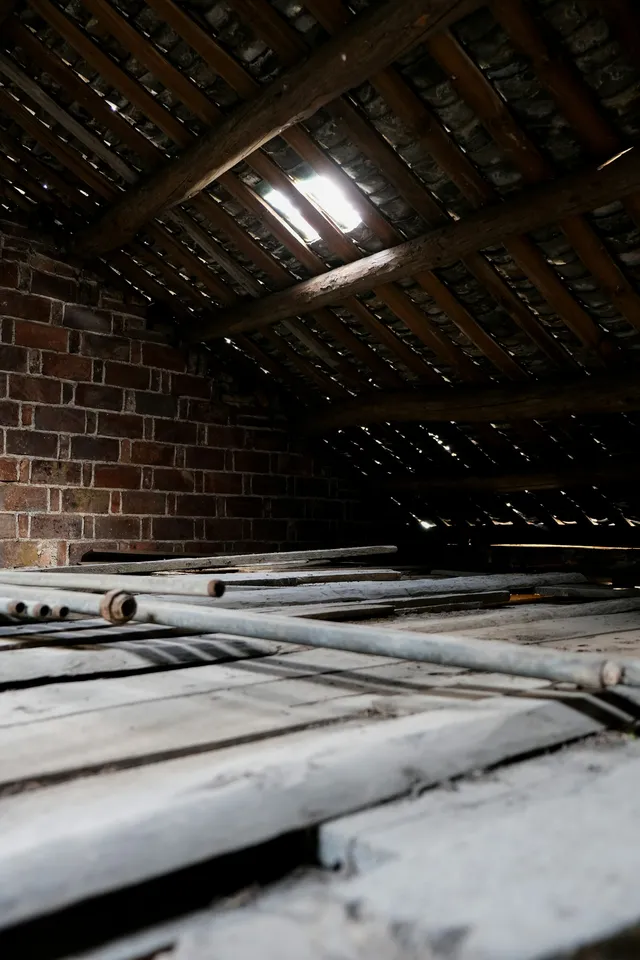
Training in a room with less headroom than a modern build. That means basements, loft conversions, under-stairs spaces and older flats — anything below about eight feet.
If the question is whether a specific machine physically fits under your ceiling, that is a different measurement and we take it apart, with an elevation drawing, in the all-in-one guide. This page is about what a ceiling does to the movements, which is the part that decides what you should buy.
Every height below is our estimate for an adult of about five foot ten, derived from a standing fingertip reach of roughly ninety inches. Yours will differ, and the diagram says how to adjust.
A ceiling does not shrink a gym. It deletes movements.
And it deletes them in a fixed order, from the top down, which means you can know exactly what you lose before you buy anything.
Three things fall out of that chart, and the third is the one nobody says.
Under eight feet, standing overhead pressing is already marginal. The load ends up around ninety-two inches, and an eight-foot ceiling is ninety-six. Four inches is not a safety margin, it is a light fitting.
At seven foot six, it is gone, and so is anything that involves leaving the floor.
Below that, skipping goes too — the rope needs about a foot above your head, which puts it right on the seven-foot line. This is the one people discover mid-session.
And then the list stops. Squats, rows, presses at any angle below vertical, hinges, carries, lunges, everything on the floor: none of them cares about your ceiling at all. A low room costs you exactly one movement pattern and one form of cardio. That is a much smaller loss than the room makes it feel like.
The fix is not a product
Here is the part worth knowing before you spend anything.
Half-kneeling buys back about twelve inches and keeps the movement intact. You go down on one knee and press vertically from there. It is the same press, the same load path, the same muscles — you have simply moved the whole thing a foot lower. Under a seven-foot ceiling, an eighty-inch lockout leaves you four inches, which is the margin an eight-foot room gives a standing lifter.
Sitting on the floor gives back three feet and is the biggest single fix on the page, at the cost of losing the standing base. Swinging a kettlebell to chest height rather than overhead gives back almost as much, and is what most people should be doing anyway.
None of that is equipment advice, which is the point: the ceiling problem is mostly solved before you buy anything. What is left is a genuinely different shopping list, because two categories stop making sense.
What stops making sense in a low room
Anything that adds height under you. A bench raises your shoulders by about eighteen inches while lying down, which does not matter, and by the same amount if you ever stand on it, which does. In a low room the floor is the right surface — we go through what that costs you in what the floor costs you.
A tall machine. This is the one that catches people, because the specification is published and still gets missed: an all-in-one trainer stands over six feet tall before you add the handle travel above it. That measurement, drawn against a standard eight-foot ceiling, is in the all-in-one guide.
A suspension trainer, partly. The straps anchor over a door, and the angle you can work at is set by how high above you the anchor sits. A low room does not stop it working — it narrows the range of angles, which means fewer ways to make a movement harder or easier.
Standing on a bike. Riding out of the saddle raises your head roughly ten inches. Seated cycling is completely unaffected, which makes a bike one of the few machines a low ceiling has no opinion about.
The pick
Under a low ceiling the pressing you do is half-kneeling, seated or inclined. All three take noticeably less load than a standing push-press does, and that changes which pair you should buy.
Best load for a room you cannot stand up and press in
PowerBlock Sport 24
- Range
- 3–24 lb per hand
- Increment
- 3 lb
- Adjustment
- Magnetic pin
- Warranty
- 5 yr residential
What we like
- Nothing it does needs headroom once you half-kneel or sit — the ceiling stops being a factor
- 3 lb steps from 3 lb, which matters more when the pressing positions cap your load anyway
- A 24 lb per hand ceiling is far less limiting seated or half-kneeling than it is standing
- Sold and shipped by Amazon, so returns run through Amazon rather than a third party
What we don't
- Still tops out at 24 lb per hand, and squats and hinges will outgrow that well before presses do
- Not expandable: the Sport line does not take the add-on kits the Elite and Pro lines do
- Owner reports converge on the plastic selector as the part that fails
- Ranked from 632 ratings, a thinner base than the bands or the straps in this guide
Being straight about the reasoning: this is not the heaviest pair we recommend, and on a page about ceilings that might look like an odd basis for a choice. It is not. A low room pushes your pressing into positions where you handle less weight, so the load you were going to buy for a standing press is load you will not use — while the fine step at the light end is the thing you will use every session. The heavier pair is in the table below if your squats say otherwise.
The field
| Product | Headroom it needs | Best for | Buy |
|---|---|---|---|
| PowerBlock Sport 24Our top pick | None, once you kneel | Real load in positions a low room actually allows | Check price → |
| WHATAFIT Resistance Bands Set | None | Pressing along a path you choose, anchored low | Check price → |
| BowFlex SelectTech 840 Kettlebell | About 58 in | Hinging and conditioning — swing to the chest, not overhead | Check price → |
| BowFlex Results Series SelectTech Dumbbells | None, once you kneel | The same trade with a much higher ceiling on load | Check price → |
| Yes4All Spinlock Set | None | Open-ended load, if the floor area is there for the plates | Check price → |
| pooboo Magnetic Belt-Drive Bike | Seated only | Cardio a low ceiling has no opinion about, unless you ride standing | Check price → |
| TRX GO Suspension Trainer | Anchor height limits it | Pulling — with a narrower range of angles than in a tall room | Check price → |
You want one complete build for a low room
The pair and the bands. Half-kneeling and seated pressing for vertical work, bands for the pulling and rotation, and nothing in the list needs a single inch above your head.
See the pin-selector pair See the band setYou squat and hinge heavier than you press
Then the load ceiling matters more than the room’s does, because squats and carries never go overhead in the first place. Buy the heavier pair and do your pressing on one knee.
See the dial pair See the plate setConditioning is what you lost, because you cannot skip
Skipping is the movement a seven-foot ceiling takes that people miss most. A kettlebell swung to chest height does the same job in the same square footage, with no rope over your head — and a bike is entirely unaffected as long as you stay seated.
See the kettlebell See the bike listingA low room is very often a basement, which changes the noise question completely — usually in your favour. The noise guide covers what is transmitted and what is not.
The room is low and also small
Then the floor plan matters as much as the height, and the two constraints interact: half-kneeling and floor work need more floor, not less. The layout arithmetic is in a complete home gym in a 10 × 10 room.
See the band set See the TRX listingWhat goes wrong in a low room
The light fitting. Not the ceiling. Almost every ceiling strike in a home gym is a pendant, a smoke alarm or a joist, and all three sit below the height you measured. Measure to the lowest thing above you, not to the plaster.
Slope, not height. A loft conversion does not have a ceiling height, it has a different one every eighteen inches. The number you want is the headroom at the spot you will actually stand, which is rarely the middle of the room.
The strap angle quietly narrows. With a suspension trainer, a low anchor means the shallowest and steepest positions both disappear. You do not notice this as a problem — you notice it as the exercise getting harder to scale.
Dropping things. A low room is frequently a basement, over a slab, which is the best floor in the house for this. It is also frequently a loft, over somebody’s bedroom ceiling, which is the worst. Know which one you have before you buy anything that gets dropped — the upstairs guide covers the rest of that problem.
Before you buy anything
- Stand where you will train and put one arm straight up. Mark the wall. That mark, plus about two inches for whatever is in your hand, is the number this whole page turns on.
- Measure to the lowest object, not the ceiling: light, alarm, beam, pipe, duct.
- Try one half-kneeling press with nothing in your hand. If that clears comfortably, your equipment list is unaffected by the ceiling and you can stop worrying about it.
- In a loft, take the measurement in three places. The usable footprint is where the headroom is, not where the floor is.
- Check what is under the floor before buying anything that gets dropped or pedalled.
Questions people ask
What is the minimum ceiling height for a home gym? For everything except standing overhead pressing and jumping, about seven feet — which is also the minimum for a habitable room under IRC R305.1. Below that you are into crawl-space territory and the answer changes.
Can I overhead press at all in a seven-foot room? Yes, half-kneeling or seated. You lose the standing version, not the movement.
Does a low ceiling rule out a rack? In practice yes, and a rack is already ruled out for most of the rooms this guide is about — adjustable dumbbells or a barbell goes through why.
Are basements bad for home gyms? Usually the opposite. The headroom is the one drawback, and it comes with a concrete floor, no downstairs neighbour and a room nobody else wants.
What about a treadmill or a walking pad? Both raise you by their deck height, four to eight inches, which is a real subtraction in a seven-foot room. The rest of that argument is in cardio in a flat without a treadmill.
Every height on this page is our own estimate for an adult of about five foot ten, derived from a standing fingertip reach of roughly ninety inches; they scale with your reach, not with your height alone, which is why step one is to measure your own. The seven-foot figure is the minimum ceiling height for a habitable room under IRC R305.1. Product specifications and availability are the manufacturers’ published figures and the live listing fields, read on 28 August 2026 — the band set and the straps are sold by their brands and the bike by a third-party seller, so returns run through them rather than Amazon. We do not buy or use this equipment. We have deliberately not recommended a bench, a rack, a treadmill or a walking pad, because none has been verified. If something here stops matching, tell us and we will correct it. More on the method in how we research, and more small-space guides in Apartment Gyms.
Specifications here are checked against the live listing on the date shown, and figures we derive ourselves are labelled where they appear.
How we research →