Quiet Home Gym Equipment for Apartments: What Actually Works
A practical guide to training in a flat without a noise complaint — which equipment transmits impact through the structure, which flooring genuinely helps, and what to buy first.
This guide contains affiliate links. Buying through one costs you nothing extra and pays for the research. As an Amazon Associate I earn from qualifying purchases. How this site is funded →
The reason most apartment home gyms get abandoned is not motivation. It is the moment you realise every set is audible to the person below you, and you start training tentatively — or not at all.
Noise in a flat is not really about volume. It is about impact transmitted through the structure, which travels far further than airborne sound and is what actually generates the complaint. Solving it means choosing equipment that never delivers a shock load to the floor.
Why your neighbour hears you
Airborne noise — talking, music, a fan — loses energy quickly and is largely blocked by a slab. Impact noise does not.
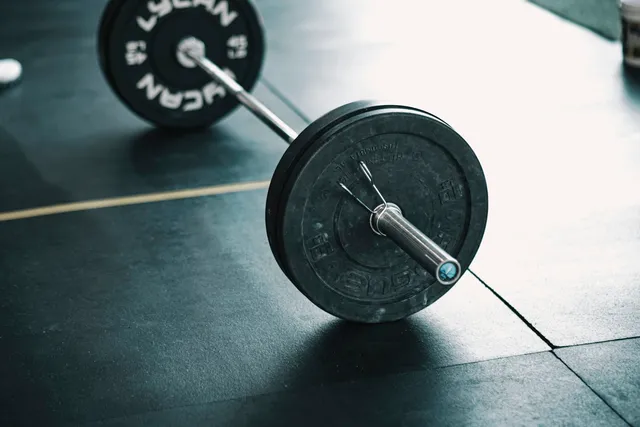
Drop a weight and you inject energy straight into the building structure, where it travels through the frame to rooms well beyond the one below you.
That is why “it wasn’t even that loud” is honest and still the reason someone knocked on your door. Only one of the two is solved by choosing a better time of day.
Equipment ranked by noise, quietest first
| Product | Best for | Buy |
|---|---|---|
| WHATAFIT Resistance Bands SetOur top pick | Silent — zero impact load | Check price → |
| TRX GO Suspension Trainer | Silent, but needs an anchor point | Check price → |
| BowFlex Results Series SelectTech Dumbbells | Near-silent if never dropped | Check price → |
| BowFlex SelectTech 840 Kettlebell | Quiet for grinds, risky for swings | Check price → |
| pooboo Magnetic Belt-Drive Bike | Quiet drivetrain, vibration transmits | Check price → |
Silent by design: bands and suspension
Bands and suspension trainers are the only categories here with no impact event at all.
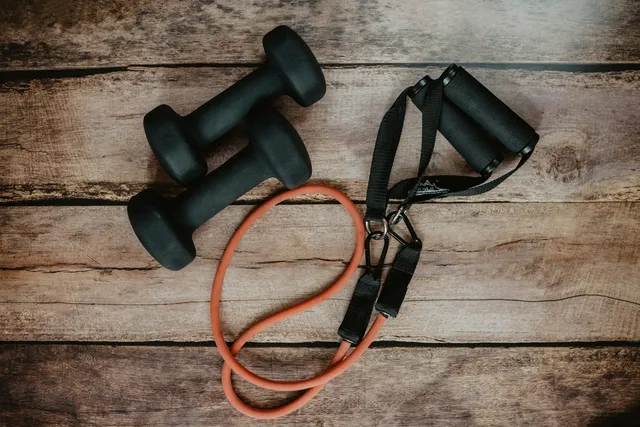
Tension builds and releases gradually, and nothing is ever set down under load. Nothing here can be dropped — that is the whole reason this pair sits at the top of the table.
For an upstairs flat with a strict landlord, this is the safe answer.
The honest limitation: bands provide ascending resistance that does not map cleanly to barbell strength standards, and progression is coarse once you move past the middle of a band set. They are excellent for accessories and genuinely good for hypertrophy work — they are not a full substitute for loaded strength training.
See our resistance band picksNear-silent with discipline: adjustable dumbbells
A dial-adjust dumbbell set is quiet in use. The noise risk is entirely in two moments: the weight change, and setting them down. Screw-collar sets are noticeably worse on the first, which is why we weight adjustment mechanism heavily in our adjustable dumbbell comparison.
The practical rule for a flat is to never train a press to true failure without a way to set the weight down under control. That single habit removes almost all of the risk.
The one to think twice about: kettlebell swings
An adjustable kettlebell is quiet for presses, goblet squats and carries. Swings are a different proposition — the deceleration at the bottom and any set-down at the end of a set both deliver sharp impulses to the floor. If swings are central to your training, this is the category where a flat genuinely constrains you.
Flooring: what helps and what is theatre
The 12mm foam puzzle mat sold as “gym flooring” protects your floor finish, not your relationship with your neighbour.
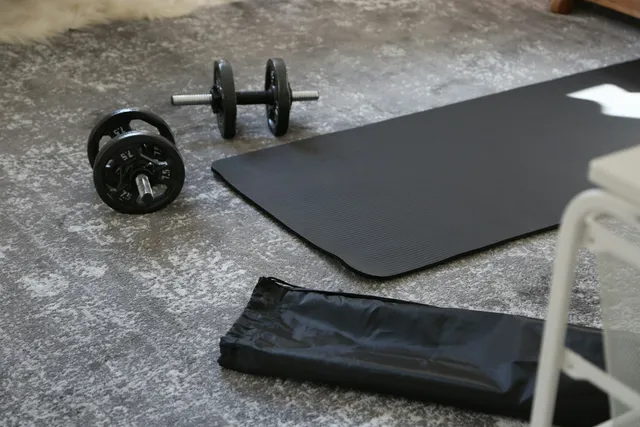
It has almost no mass, and impact isolation needs mass plus a resilient decoupling layer. Both have to be there before anything reaches your neighbour differently.
What actually helps, in order of effectiveness:
- A dense rubber mat over a foam underlay. The rubber adds mass, the foam decouples it from the slab. This combination meaningfully reduces transmitted impact.
- Horse stall mats. Cheap per square foot, extremely dense, and the standard answer in home gym communities for a reason. Heavy and awkward to get up a stairwell.
- A dedicated drop zone rather than wall-to-wall coverage. Concentrating the budget where the impact happens beats spreading a thin layer everywhere.
What does not help: a yoga mat, thin foam tiles alone, or carpet. None of them add mass.
The practical apartment setup
If you are starting from nothing and cannot make impact noise, the highest-return order is:
- A resistance band set — covers accessories, warm-ups and pulling patterns silently.
- A dial-adjust dumbbell pair — the single most versatile purchase, quiet if handled with care.
- A dense mat for the training area — protects the floor and takes the edge off set-downs.
That sequence gets you a genuinely complete training setup with no impact events, which is the only version of an apartment gym that survives past the first month.
Bottom line
Choose equipment that never loads the floor dynamically, and the noise problem mostly disappears without any flooring at all. Bands and a dial-adjust dumbbell set cover the overwhelming majority of useful training. Add mass under the training area if you want margin — and accept that explosive work with heavy loads is the one thing a flat will not let you do quietly.
Specifications here are checked against the live listing on the date shown, and figures we derive ourselves are labelled where they appear.
How we research →