All-in-One Home Gym for a Small Space: When It's the Right Buy, and When It Isn't
The footprint on the listing is the machine standing still. Here is the space it actually takes while you train, measured against a 100 sq ft room — and the setup that beats it when you are allowed to drill.
This guide contains affiliate links. Buying through one costs you nothing extra and pays for the research. As an Amazon Associate I earn from qualifying purchases. How this site is funded →
You have measured that corner more than once. On paper it fits every time.
And you still have not bought it. That hesitation is not indecision — it is the part of you that has already stood in that room, mid-row, elbows going back, and felt the wall.
You are right. The listing measures the machine. Nobody measures the room around it.
This is about the cable and digital-resistance all-in-ones: motors and a screen instead of a plate stack. Above that class you are into wall-mounted trainers that need studs and a subscription. Below it, the folding pulley towers do not replace anything.
The figures below are real, not averages: they come from one of the few units in the class that publishes its dimensions in full. Which unit, and whether it is worth your money, comes at the end — after you know what your room actually demands. Work out the constraint first, then look at what meets it.
The number the listing doesn’t give you
48.03 × 27.16 × 72.83 in unfolded. 14.56 in deep folded. 171.96 lb. One manufacturer even built a page called Will it fit? — and it describes only the object. No clearance figure. No ceiling height. No minimum room dimension.
Start with the number people misread. The 48 inches is depth, not width. The unit is 27 inches across and projects four feet into the room. Plan around 48 inches of wall and you planned the wrong wall.
About 47 square feet. In a 10 × 10 room, the machine and the space to use it take up close to half the floor while you train. Plan around that number, not the listing.
The movement you are already worried about
You know which one. The fly where your hand finishes somewhere it has never been in that room.
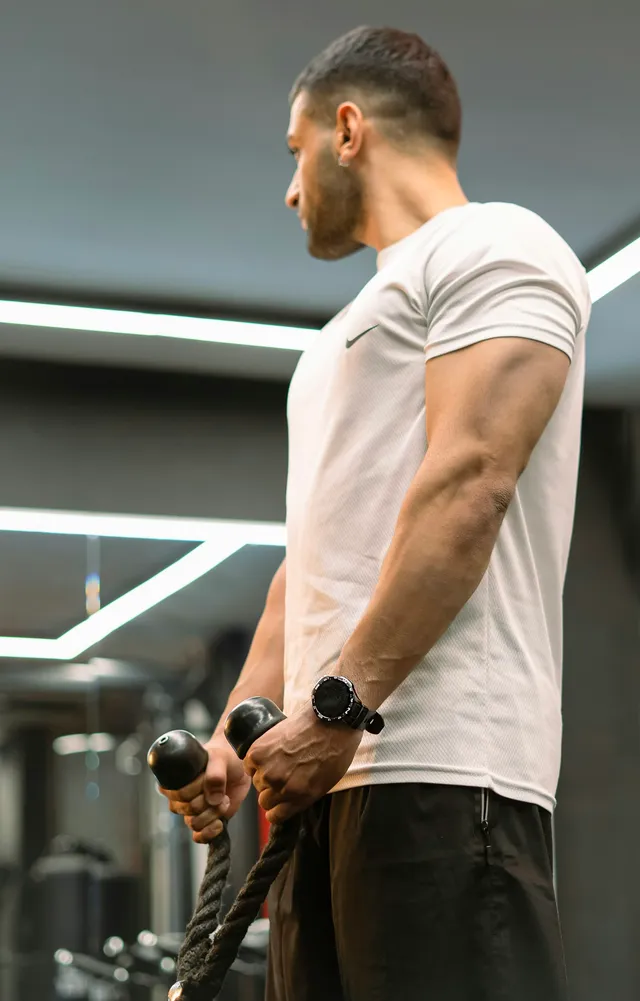
Two feet either side is what that costs. A fly, a woodchop, a single-arm press — all finish well outside the frame. If a wall sits 18 inches from the arm, the movement stops at the wall.
Behind you, a seated row adds a bench and your torso before the handle even moves. A standing row needs a step back before there is tension in the cable. Neither is exotic — they are the movements you are buying the thing for.
An 8 ft ceiling doesn’t rule out the machine
Everyone asks this about the machine. The machine is not the problem.
It stands 6 ft 1 in, leaving 23 inches of air. You are the constraint: at 5 ft 10 in, hands overhead land around 7 ft 6 in — six inches short of the ceiling before you load anything.
Seated and half-kneeling overhead work is fine. Standing pressing is where you run out of room.
What “folds flat” really costs
Folding sounds like the feature that solves everything. It is the one most likely to go unused.
It is 172 lb on wheels. A machine you unfold every session gets used on the days you feel like doing that — and you know how many of those there are. If the room is yours alone you will leave it out, and the folded number stops mattering.
Folded is also not gone. Fifteen inches by 27 by six feet tall is a wardrobe standing in the room. In a shared space that is the point: it disappears against the wall. It does not disappear.
The three questions that decide it
Are you adding weight to a bar every week?
220 lb total, 110 lb per arm, in 1 lb increments. For pressing, rowing and accessory work, those 1 lb jumps beat any dumbbell rack.
For squats and deadlifts, 220 lb is a number you can see the end of. That is what decides the purchase — not the floor space.
Are you allowed to drill into the wall?
This separates the two routes, and no manufacturer blog asks it. A folding rack lives on lag bolts through drywall into studs. In a rental that is often a straight no. The machine needs a floor and a socket, and it leaves when you leave.
Who is under your floor?
If you have ever caught a dumbbell on the way down so it would not land, you already understand this one.
No plates means nothing to drop and no impact into the structure. With a neighbour below you, that beats any spec on the page — it is the difference between training freely and training tentatively.
We covered the mechanics in the apartment noise guide, and it applies directly here.
When the all-in-one is the right buy
When the room is shared, when you cannot fix anything to the wall, when noise through the floor is real, and when your goals sit under 220 lb.
Best for a shared or rented small room
Speediance Gym Monster 2
- Unfolded
- 48 x 27 x 73 in
- Folded
- 15 x 27 x 73 in
- Resistance
- 220 lb, 1 lb steps
- Weight
- 172 lb
What we like
- Folds from 48 in of depth to 15 in against the wall
- 220 lb in 1 lb increments — smaller jumps than any dumbbell set
- Nothing to drill, nothing to drop, nothing to annoy the floor below
- The subscription is optional: the machine trains without it
What we don't
- 220 lb total and 110 lb per arm is a real ceiling for lower-body work
- 172 lb to move, and folding is a habit you either keep or abandon
- Motors, a control board and a screen are failure points a rack does not have
- Two-year warranty on a machine you expect to outlast a decade
When it isn’t
If you can put bolts in a wall, the same 100 square feet holds a folding rack, a bench and a pair of adjustable dumbbells — and it disappears more completely than any machine.
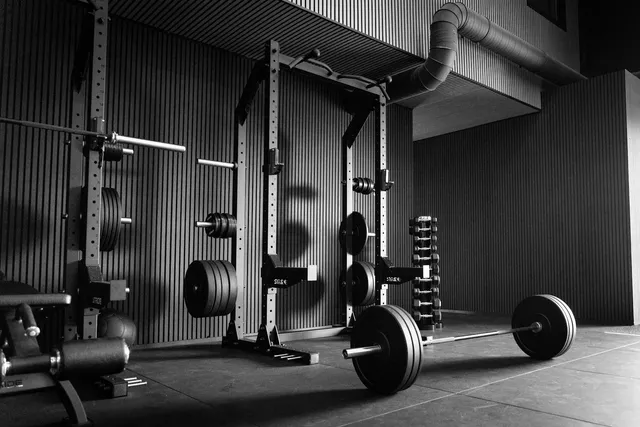
You get a load ceiling limited only by what you buy, equipment with no firmware that cannot be discontinued, and a much lower entry price.
You take on plates that make noise, a bar that needs width, and a wall you have to be allowed to drill.
While you lift, this route needs more room — about 8.5 ft of width, because a 7 ft bar has to clear the uprights. When you are done it folds to a few inches of wall and the room is a room again.
What actually goes in the room
The machine is one answer to 100 square feet. It is not the only one, and for a lot of rooms it is not the best one. Here is the whole field, with what each one is actually for.
| Product | Load | Best for | Buy |
|---|---|---|---|
| Speediance Gym Monster 2Our top pick | 220 lb, 1 lb steps | One machine, nothing drilled, nothing dropped | Check price → |
| BowFlex Results Series SelectTech Dumbbells | 5–52.5 lb | The fastest weight change in the category | Check price → |
| PowerBlock Sport 24 | 3–24 lb, 3 lb steps | The smallest footprint, and the finest jumps | Check price → |
| Core Fitness Adjustable Set | 5–50 lb | A dial set when the BowFlex is out of stock | Check price → |
| Yes4All Spinlock Set | 40–200 lb total | Lowest entry cost, if you accept the slow change | Check price → |
| WHATAFIT Resistance Bands Set | Up to 150 lb stacked | Zero impact into the floor, packs into a drawer | Check price → |
| TRX GO Suspension Trainer | Bodyweight, 0.68 kg | A full session hung off one door | Check price → |
| BowFlex SelectTech 840 Kettlebell | 8–40 lb | Conditioning without a second piece of kit | Check price → |
| pooboo Magnetic Belt-Drive Bike | Belt, 100 levels | Cardio in the corner, if the floor allows it | Check price → |
You are not allowed to drill, and the machine is more than you want to spend
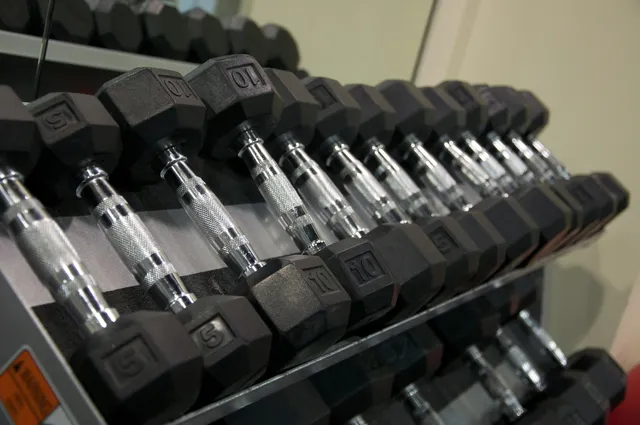
This is the most common version of the problem, and the answer is a pair of adjustable dumbbells and a bench. That rack is what you are replacing: fifteen pairs of fixed weights, one wall, and a price that makes the machine look reasonable.
Above 25 lb, the BowFlex Results Series dial is the difference between finishing a superset and quitting halfway. Use that full name when you search: the older BowFlex 552 it replaced is under a CPSC recall, and the two are one keystroke apart. Under 25 lb — rear delts, laterals, curls, and every rehab movement — the PowerBlock Sport 24 wins on something the BowFlex cannot match: 3 lb jumps instead of 5, in a block small enough to live under a sofa. If you are training light and precise, buy the smaller one.
See the BowFlex listing See the PowerBlock listingWe ranked the whole category, including the cheaper screw-collar sets and where they stop making sense, in the adjustable dumbbell guide.
There is someone directly below you
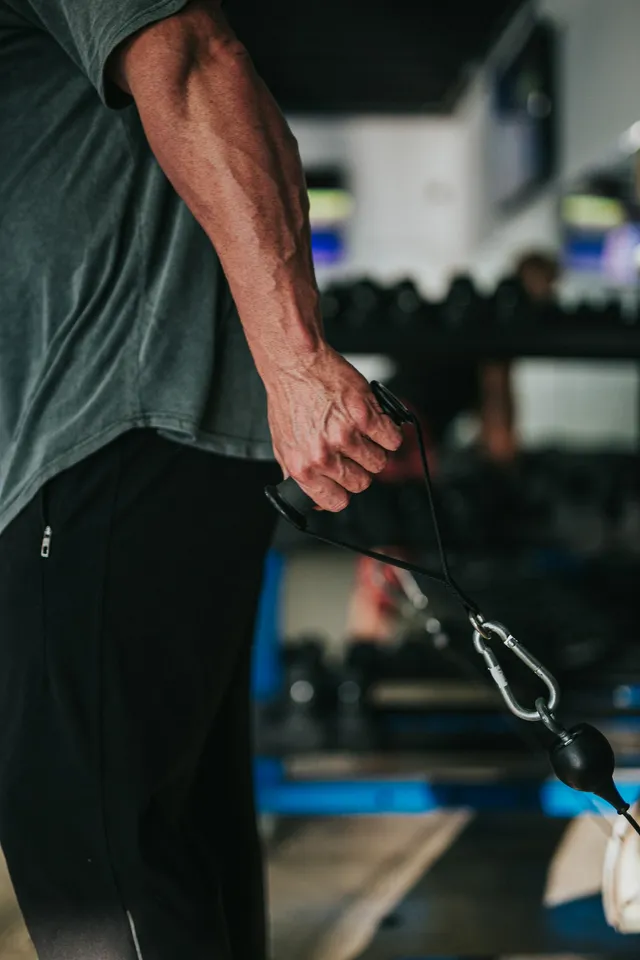
If you have ever finished a set and lowered the weight in slow motion so it would not land, this is your constraint, and no amount of floor matting fixes it.
Bands and straps are the only things here that cannot produce an impact event at all. Tension builds and releases; nothing is ever set down under load. The WHATAFIT set stacks to 150 lb and includes the door anchor. The TRX GO weighs 0.68 kg and hangs off the same door — it trains the pulling movements bands are worst at.
Neither replaces heavy lower-body work. Both let you train at 6am without listening for footsteps.
See the band set See the TRX listingYou want conditioning in the same square footage
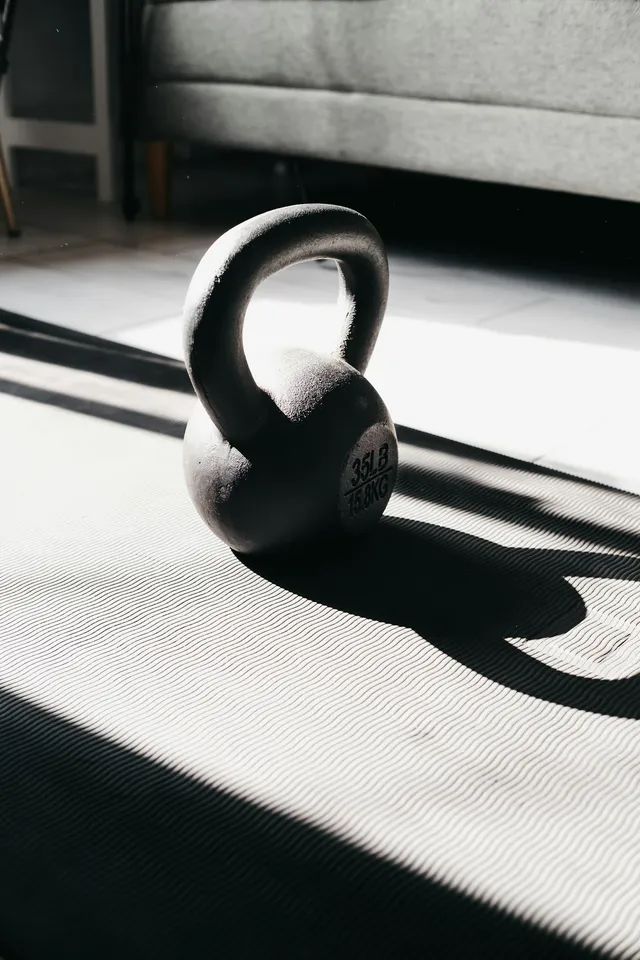
Strength gear does not do this job, and the machine does it badly.
The SelectTech 840 covers 8 to 40 lb on a dial and takes up a floor tile — but read the noise warning honestly: a kettlebell is quiet for presses and carries, and a dropped swing is the loudest thing you can do in a flat. If you swing, you need the mat, and you may still need the ground floor.
The pooboo bike is the opposite trade. Belt drive and magnetic resistance mean it makes almost no airborne sound, but a bike runs for thirty minutes and pushes continuous vibration into the structure the whole time. Quiet in your room is not the same as quiet in theirs. We go through that difference properly in the apartment noise guide.
See the kettlebell listing See the bike listingWhat breaks, and who fixes it
A barbell has no failure mode worth discussing. A rack fails when the building does.
An all-in-one adds motors, a control board, a touchscreen and firmware — and all of it is proprietary. The question is not “will it break”, it is who fixes it in year four, and with what part.
Two things fall in Speediance’s favour: the warranty runs two years, and the subscription is optional. A machine that stops working when the company stops billing is worth nothing on resale.
Measure your room before you order
- Mark the unfolded footprint — 27 in along the wall, 48 in into the room.
- Add two feet either side and three and a half feet in front. That is what you are buying.
- Stand in it and mime a row, a fly and a press. If your hand meets a wall, the layout fails.
- Reach overhead and measure the gap. Under six inches means standing pressing is out.
- Check the route in. 172 lb in a crate, up your stairs. The 27 in width saves you here.
Questions people ask
Does it need a subscription? Not for the Gym Monster 2 — Wellness+ is optional. Check this on any competing unit; it is the biggest difference in what the thing is worth in five years.
Will it fit under an 8 ft ceiling? Yes, with 23 inches to spare. Standing overhead pressing is what runs out of room, not the machine.
Can it replace a squat rack? For general strength, yes. Above 220 lb, no — and that is a specification, not an opinion.
Is it apartment-friendly? More than plates are. Nothing to drop, no impact into the floor.
What about resale? Proprietary parts and a two-year warranty are the risk. The optional subscription is the mitigation.
Specifications above are Speediance’s published figures, checked against the live listing on 25 August 2026. Clearance and reach figures are our estimates, derived as described and labelled where they appear. If a figure here stops matching the listing, tell us and we will correct it. More on the method in how we research, and more small-room guides in Apartment Gyms.
Specifications here are checked against the live listing on the date shown, and figures we derive ourselves are labelled where they appear.
How we research →