Home Gym Equipment for an Upstairs Flat With No Lift
The thing that stops a home gym on the third floor is not the budget. It is a stair landing 36 inches square, a doorway narrower than the box, and a delivery driver who stops at the kerb. Here is what actually gets up there.
This guide contains affiliate links. Buying through one costs you nothing extra and pays for the research. As an Amazon Associate I earn from qualifying purchases. How this site is funded →
You have done the budget. You have measured the room. You have not thought about the stairs.
Almost nobody does, until a driver rings from the kerb to say the crate does not go past the first landing, and the question stops being what you can afford and becomes what physically fits.
This guide is about that second question, because no buying guide asks it and it decides more purchases than price does.
The number that stops the delivery is not the weight
Weight is a problem you can solve with a friend and an afternoon. Geometry is not negotiable.
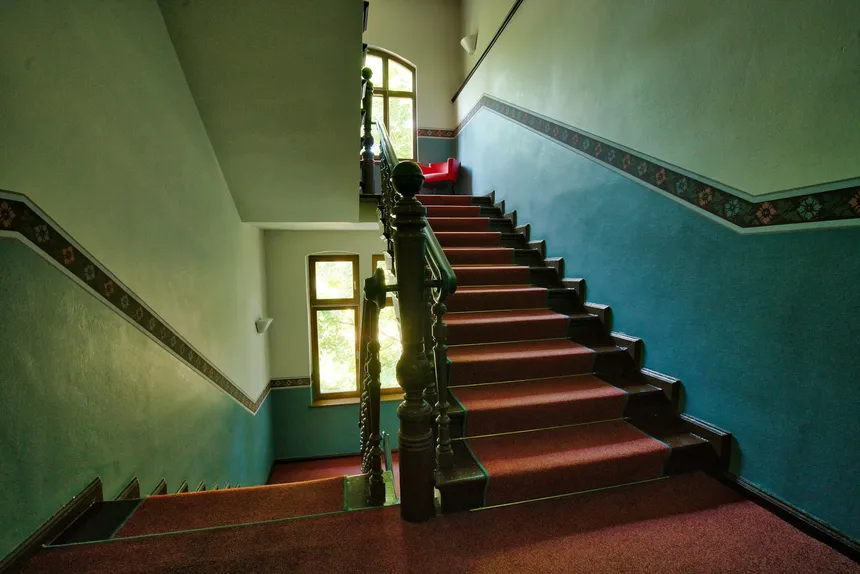
US residential stairs have a code minimum of 36 inches of clear width, dropping to 31½ inches where a handrail runs down one side and 27 inches with a handrail on both. Headroom is 6 ft 8 in. A landing must be at least 36 inches measured in the direction of travel.
Those are the numbers your building was built to, and older blocks often sit right on them.
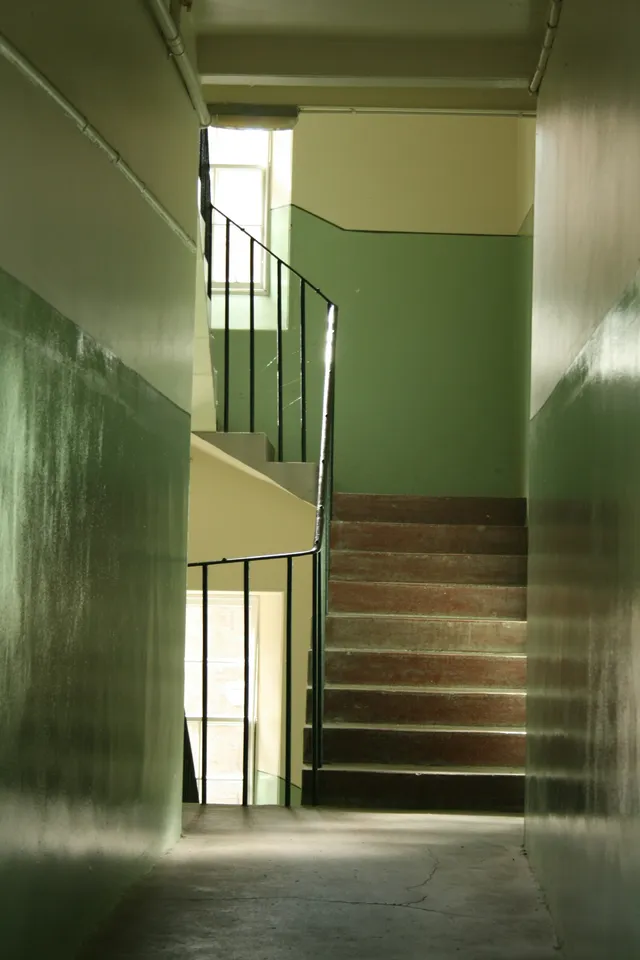
A minimum landing is 36 inches square. Its diagonal is a little under 51 inches, and that diagonal is the longest rigid thing you can swing through the turn.
So the awkward item is not the heaviest one. It is the longest one. A crate around six feet long does not turn on a minimum landing — not with four people, not by tilting it. It goes up a straight flight or it does not go up.
If your stairwell is straight from bottom to top, most of this problem disappears. If it turns once per floor, measure the landing before you order anything tall.
What the listing tells you about weight, and why you cannot use it
Here is the trap specific to this problem.
Amazon lists an Item Weight and Item Dimensions field on most listings, and buyers plan their carry on them. Those fields are supplied by the seller and are frequently placeholders.
The bike we rank elsewhere on this site is the clean example: its own listing gives an item weight of 20 pounds and dimensions of a 20-inch cube — for a machine rated to carry a 350 lb user. No spin bike weighs twenty pounds. Those are not measurements, and a stair plan built on them fails at the first landing.
Treat the field as a hint. Where the manufacturer publishes a real figure — as Speediance does for its machine, at 171.96 lb and 27.16 inches wide — use that instead, and note that the width is the number that matters here: 27.16 inches clears even a stair with handrails on both sides, with about half an inch to spare.
The doorway, which people forget entirely

A standard interior door is 30 to 32 inches wide, and the door leaf, its stop and its hinges eat into that. The clear opening you actually get is usually a couple of inches less than the number on the frame.
Measure the narrowest door on the route, not the front door. It is normally the one into the room you are furnishing, and it is often the one nobody thinks to check.
Then measure the corridor outside it. Turning a long box into a doorway needs width in front of the door, and a corridor that is narrower than the box makes a 90-degree entry impossible regardless of the door itself.
What actually goes up three flights
Ranked here by how easily it makes the journey, not by how well it trains you. Everything in this table was checked against its live listing on 27 August 2026.
| Product | Carrying it up | Best for | Buy |
|---|---|---|---|
| TRX GO Suspension TrainerOur top pick | 0.68 kg, one box | Fits in a coat pocket, trains the whole body | Check price → |
| WHATAFIT Resistance Bands Set | A drawer, one bag | Stacks to 150 lb and weighs almost nothing | Check price → |
| PowerBlock Sport 24 | 10 × 5.5 × 5.5 in each | Two small blocks rather than one long crate | Check price → |
| BowFlex SelectTech 840 Kettlebell | 40 lb, one unit | Heavy but compact — a two-hand carry, one trip | Check price → |
| BowFlex Results Series SelectTech Dumbbells | Two units plus cradles | Splits into separate boxes, but each one is a load | Check price → |
| Core Fitness Adjustable Set | 50 lb per dumbbell | The heaviest per-unit carry of the dial sets | Check price → |
| pooboo Magnetic Belt-Drive Bike | Listing weight not credible | One long crate — measure the landing first | Check price → |
If you are on the top floor and hate stairs
Buy the straps. The TRX GO is 0.68 kg and arrives in something you could put through a letterbox, and it hangs off a door you already own. Nothing else here gives you a full-body session for that little logistics.
See the TRX listingAdd the band set and you have covered pressing, pulling and everything in between without a single awkward carry.
See the band setIf you want real weight upstairs
Adjustable dumbbells are the right compromise, because they arrive as two separate manageable objects rather than one crate. The PowerBlock Sport 24 is the easiest of them: each block is about 10 by 5.5 by 5.5 inches, which goes up any staircase in one hand.
The dial sets go heavier and are correspondingly worse to carry — a Core Fitness dumbbell is listed at 50 lb on its own. That is a real carry, twice.
See the PowerBlock listingBefore you buy any of them, read what breaks on adjustable dumbbells and check you are buying a pair rather than one — that mistake costs more than the stairs do.
If you want cardio
This is where the stairs win. A bike is one long crate, it is the item most likely to fail the landing test, and it is the one whose listed weight you can trust least. If you are set on it, measure first, and read the apartment noise guide too — a bike upstairs is a vibration problem as well as a delivery one.
See the bike listingMeasure your route before you order
Do this once. It takes ten minutes and it is the cheapest insurance in this whole category.
- Walk the route with a tape, from the kerb to the room, and write down the narrowest number you meet. That single figure is your limit.
- Measure every landing, corner to corner. The diagonal is your maximum rigid length.
- Measure the clear opening of the narrowest door, with the door open — not the frame.
- Check the headroom on the turn. Code minimum is 6 ft 8 in, and a tall box tilted to take a corner needs more vertical room than a level one.
- Ask what the delivery actually includes. Kerbside, threshold and room-of-choice are three different services, and the listing usually says which one on the delivery panel.
- Prefer several small boxes to one big one, every time. This is the whole strategy.
Questions people ask
Will a delivery driver carry it upstairs? Only if the listing says so. Kerbside delivery means the kerb. Some heavy items offer room-of-choice delivery, and it is stated on the product page before you buy rather than negotiated after.
Can I get a machine up a spiral staircase? Code allows spiral stairs down to 26 inches wide with 6 ft 6 in of headroom, and the continuous turn means there is no straight run at all. Assume nothing rigid and long goes up one.
Is the listed shipping weight ever right? Often, but not reliably, and you cannot tell which from the page. Where the manufacturer publishes a specification separately, believe that one.
What if it fits but I cannot lift it? Two people and a stair strap solve most of the weight problem. Neither solves geometry, which is why the measuring comes first.
Stair, landing, headroom and spiral dimensions are the published minimums from IRC section R311.7; your building may exceed them, and older buildings sometimes predate them, so measure rather than assume. The 51-inch landing diagonal is our own figure worked from those minimums and is an estimate of a practical limit. Product weights and dimensions are manufacturers’ published figures or the live Amazon listing fields, read on 27 August 2026, and where a listing field is not credible we have said so rather than repeated it. If something here stops matching, tell us and we will correct it. More on the method in how we research, and more small-space guides in Apartment Gyms.
Specifications here are checked against the live listing on the date shown, and figures we derive ourselves are labelled where they appear.
How we research →