What a Home Gym Weighs, and What Your Floor Is Rated For
The floor under a flat is designed for a number, and that number is published. Run your gym against it and the answer is not close — but the arithmetic everyone does in their head is the wrong arithmetic.
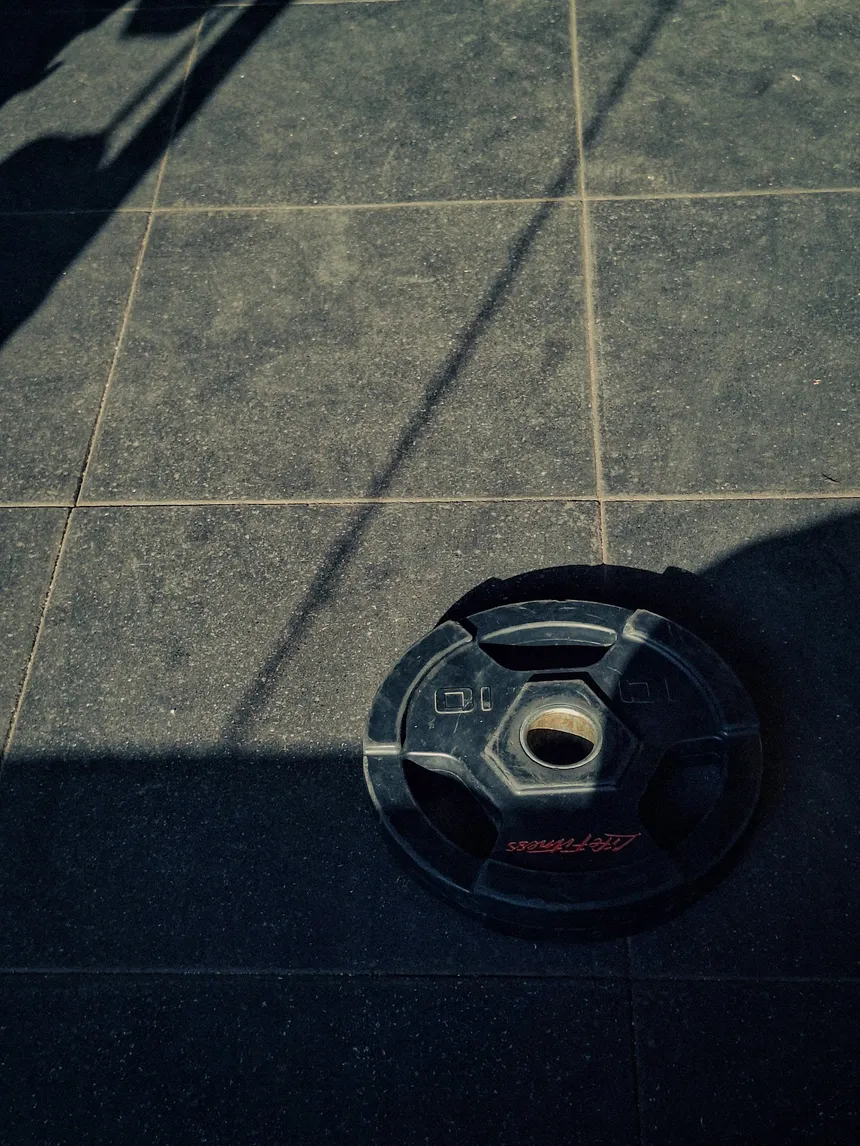
This guide contains affiliate links. Buying through one costs you nothing extra and pays for the research. As an Amazon Associate I earn from qualifying purchases. How this site is funded →
You are on the third floor. The corner is empty, the tape measure says it fits, and the basket is loaded. And then you picture the whole lot standing there — the plates, the bench, you on top of it — and you think about the ceiling of the flat below.
Nobody says this part out loud. It sounds like an odd thing to worry about, so you search for it once, find a forum thread full of people telling each other it will be fine, and close the tab without believing any of them.
Here is the thing: there is a real number. Your floor was designed to a published minimum, that minimum is written into the residential code, and you can check your gym against it in about a minute.
The answer is not close. But it is not close for a reason that has nothing to do with the arithmetic most people run in their heads.
What this covers
A normal home gym — free weights, a bench, bands, one cardio machine — in a normal timber-framed flat or house, upstairs. Not a commercial rack with a loaded barbell dropped from height, not a converted warehouse, and not any structure where somebody has already told you there is a problem.
Two figures below are code, not estimates: the International Residential Code sets a minimum uniformly distributed live load of 40 lb per square foot for habitable rooms and 30 lb per square foot for sleeping rooms (IRC Table R301.5). Everything else here — the footprints, the furniture weights — is our estimate, and is labelled as such where it appears.
We are not structural engineers, and this article is not a structural assessment. It is the arithmetic, done honestly, so you know whether you have a question worth paying someone to answer.
The arithmetic everyone runs, and why it misleads
Weight divided by footprint. That is what you do in your head, and it produces a frightening number for the smallest object you own.
An adjustable kettlebell weighs 40 lb and sits on about half a square foot. That is 80 lb per square foot — double the code minimum for the room it is standing in.
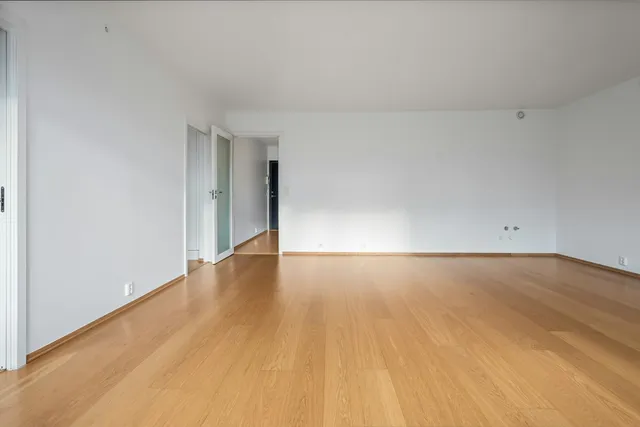
And it is completely harmless. Forty pounds is a small dog. Nobody has ever put a foot through a floor with a small dog.
That is the whole trap. Pounds per square foot is the unit the code is written in, so it feels like the unit your answer should come in — but the code number describes a load spread evenly across an entire room, carried by joists that span several feet and share what lands on them. A dense object on a tiny footprint does not load a floor the way its own psf figure suggests, because the joist underneath it does not know or care how small the contact patch was.
Run the arithmetic the other way and it stops being frightening.
The number that actually matters
Take the room, not the object. A 10 × 10 ft habitable room at the 40 psf minimum is designed for 4,000 lb of live load.
Now weigh a fully equipped home gym. A dial-selector pair is 105 lb. An adjustable kettlebell is 40 lb. A bench is around 40. Bands and straps together are under 5. An upright bike is somewhere near 60. Add two adults standing in the room at 350 lb between them.
That is roughly 600 lb — about 15% of what the room was designed to hold, in the worst case where every one of you and all of it is in there at once.
You would have to fill that room with gym equipment, floor to knee height, wall to wall, before the design basis became the interesting question.
What is already standing in your flat
The comparison that settles it is not with other gyms. It is with the furniture that has been in the room for years without anybody measuring anything.
A filled fish tank is the heaviest thing most people ever put in a flat, by a wide margin, and it goes in on a Saturday afternoon with no arithmetic at all. An upright piano beats any home gym corner. A bookcase packed with hardbacks matches one.
If your floor carries a full bath — and it does, every day, with somebody in it — the gym is not the thing to worry about.

Where there is a real question
Three cases genuinely change the answer, and it is worth being clear about them rather than pretending the arithmetic covers everything.
Dropping. Everything above is static load. A dropped weight is not — it is the same mass arriving in a fraction of a second, and the force at the floor is many times the weight of the object. This is a noise and a damage problem before it is ever a structural one, and it is the reason a quiet apartment setup puts so much effort into never dropping anything.
Concrete versus timber. Everything here assumes a timber-framed floor with joists. A concrete slab has an entirely different answer and an easier one.
Anything already sagging, bouncing or converted. A floor that flexes when you walk across it, a loft conversion, an old building with unknown joists, a floor somebody has notched for pipework — these are the cases where the honest answer is that you need someone who can look at the structure, not an article.
The variable you actually control
Not the total. You cannot change what a 105 lb pair weighs.
What you choose is whether that load lives in one dense pile in one corner, permanently, or spread flat and put away between sessions. And the reason to prefer spread has almost nothing to do with structure — it is that a tower of plates in the corner of a rented flat is the thing that dents a floorboard, marks a carpet, and costs you a deposit.

So the buying question turns out to be the same one this site keeps arriving at from other directions: how much load can you get into a form that does not have to live in a heap on the floor? That points at selectorised weight over loose plates — not because plates are dangerous, but because a set that stores in 2 sq ft is the one you will actually put away.
The verdict
Most load in the least stored footprint
BowFlex Results Series SelectTech Dumbbells
- Range
- 5–52.5 lb
- Increment
- 2.5 lb to 25 lb
- Adjustment
- Dial, ~3 sec
- Replaces
- 15 pairs
What we like
- Puts 105 lb of load into a footprint of roughly 2 sq ft, stored
- One purchase replaces the plate stack that would otherwise live in the corner
- Sold and shipped by Amazon, so returns run through Amazon
- Range of 5–52.5 lb per hand covers most households from one buy
What we don't
- Denser per square foot than loose plates spread across a floor
- The dearest form of load per pound in this catalogue
- Dropping a selectorised dumbbell is exactly what you must not do upstairs
The BowFlex Results Series SelectTech is not the lightest thing here and it is not the cheapest load. It wins this particular page because the question behind “will my floor hold it” is usually “can I have a proper gym up here at all”, and this is the most capable load that never needs a plate tower standing in the corner of the room.
If you want the reasoning on the mechanism itself rather than the floor, what breaks on adjustable dumbbells covers it.
The field
| Product | What it puts on the floor | Best for | Buy |
|---|---|---|---|
| BowFlex Results Series SelectTech DumbbellsOur top pick | 105 lb total | The most load that still stores flat | Check price → |
| Core Fitness Adjustable Set | 100 lb total | The same idea, in 5 lb steps | Check price → |
| PowerBlock Sport 24 | 48 lb total | A lighter household, less to store | Check price → |
| Yes4All Spinlock Set | 40–200 lb total | Load you can spread flat across the floor | Check price → |
| BowFlex SelectTech 840 Kettlebell | 40 lb | One dense object, trivial in absolute weight | Check price → |
| WHATAFIT Resistance Bands Set | No static load | Training with nothing stored on the floor | Check price → |
| TRX GO Suspension Trainer | 0.68 kg | Load carried by a door frame, not the joists | Check price → |
The landlord asked, and you want to be able to say “nothing heavy”
Then buy nothing heavy. Bands and a suspension trainer put no permanent load on the floor at all, store in a drawer, and load a door frame rather than the structure. It is a smaller gym than the one you wanted, and it has real limits — but it is the honest answer to that constraint rather than a workaround.
Check the band set on Amazon Check the suspension trainerThe room is a bedroom, so the design basis is 30 psf, not 40
It changes the number and it does not change the conclusion — a 10 × 10 bedroom is still designed for 3,000 lb, and the gym is still under a fifth of it. Buy the range, store it flat, and put it against an outside wall where the joists are supported rather than in the middle of the span.
Check the pair on Amazon Check the lighter pin-selector pairYou want the most load for the least money and you can lay it out flat
Plates are the cheapest pound of weight there is, and spread across the floor rather than stacked they are also the least concentrated thing in this article. The trade is time: a screw-collar change takes about forty seconds against three for a dial, and that tax compounds.
Check the plate set on Amazon Check the adjustable kettlebellYou want cardio and the machine is the heaviest thing you would own
A belt-drive upright bike spreads its own weight plus yours across roughly 8 sq ft, which makes it the least concentrated item on this page even though it is the largest. It also runs its resistance magnetically, and the noise question is covered in cardio in a flat.
Check the bike on Amazon Check the suspension trainer insteadWhat breaks, and who fixes it
Not the floor. What actually gets damaged upstairs is the surface, and it is nearly always one of three things.
Floorboards, under a dense object left in one place. A kettlebell or a plate stack standing on a softwood board for a year leaves a mark that does not come out. A mat under it is a few pounds and solves it entirely.
Carpet, permanently. Compression under a static load is not damage a landlord distinguishes from wear, and it does not recover.
Whatever is directly below, from a single drop. One dropped bell does more in a second than a year of standing load, and it is the one failure mode on this page that is genuinely yours to prevent.
For returns: the pair above and the plate set are both sold and shipped by Amazon. The band set ships from Amazon but is sold by WHATAFIT LLC, and the suspension trainer by TRX Training — returns on those run through the seller, not Amazon.
Before you buy: four checks, thirty seconds each
- Walk the room and feel for bounce. A floor that moves under your own footfall is the one case here that deserves a professional look before anything is delivered.
- Find which way the joists run — usually perpendicular to the floorboards. Load parked along an outside wall sits near a support; load in the middle of a room sits at mid-span.
- Add up what you are actually buying, in pounds, and put it against 40 psf times your room area. If you are under a quarter of it, you have your answer.
- Check the floor covering you would be standing the load on, and price a mat at the same time. It is the cheapest part of the purchase and the only part that protects a deposit.
Questions people ask
Can my apartment floor hold a home gym? Almost certainly. A habitable room is designed to a minimum of 40 lb per square foot of live load, which is 4,000 lb in a 10 × 10 room; a fully equipped home gym plus two adults comes to roughly 600 lb. The exceptions are floors that already flex, unknown or converted structures, and dropping.
Is it a problem that a kettlebell is 80 lb per square foot? No. That figure is real arithmetic and it is the wrong question — psf describes a load spread across a room, and a 40 lb object does not load a joist the way its own contact patch suggests. Total weight is what the design basis is about.
Do I need a mat? For the floor covering, yes — it is the cheapest insurance on this page. For the structure, no.
Does dropping weights change the answer? Yes, and it is the only thing here that does. Everything above is static load. Do not drop anything upstairs, which is also the noise answer.
What about a concrete floor? Easier in every direction, and none of the timber-joist reasoning applies.
Sources and method. Live load minimums are from IRC Table R301.5: 40 lb per square foot for habitable rooms, 30 for sleeping rooms. Product loads are published maximums read from the live listings on 28 and 29 August 2026. Footprints, furniture weights and the room totals are our estimates, derived from typical published dimensions — they are labelled as estimates wherever they appear, and none of them is a structural assessment. If your floor bounces, is converted, or has been altered, the answer here is to ask someone qualified to look at it rather than to trust an article.
Found a figure that does not match what you measured? Tell us and we will check it again.
More on how these are put together in how we research, and the rest of the cluster in Apartment Gyms.
Specifications here are checked against the live listing on the date shown, and figures we derive ourselves are labelled where they appear.
How we research →