Should You Wait for Black Friday to Buy a Home Gym?
The discount does not grow while you wait, and a third of the aisle was already cut in September. What waiting costs is sessions, and that number you can work out exactly.
This guide contains affiliate links. Buying through one costs you nothing extra and pays for the research. As an Amazon Associate I earn from qualifying purchases. How this site is funded →
You have the tab open. You have had it open for a while now.
Somewhere between the first time you looked and today, the question quietly changed. It stopped being which one and became not yet — and “not yet” now has a date attached to it, because somebody told you that the last Friday in November is when this gets cheaper.
So the corner stays empty. Not because you cannot decide, and not because you cannot afford it. Because waiting feels like the responsible version of buying.
It is worth knowing what that decision actually costs, in a number you can check, before you make it again for another twelve weeks.
What this covers
Buying free weights, bands, straps or a small piece of cardio for a home gym, and whether the last week of November is a better moment to do it than today. It does not cover machines costing several times the rest of this list, where the arithmetic genuinely does change — that gets said plainly further down.
Every discount figure here was read from live listings on 1 September 2026, and every one of them is a percentage. No price appears on this site, which turns out to be exactly the right constraint for this particular subject.
The wait is measured in weeks. The discount is not.
Start with the thing nobody puts in the comparison: the cost side.
From the first of September to Black Friday 2026 is eighty-seven days. That is not an opinion, it is a calendar. Multiply it by whatever your honest training week looks like and you get the only figure in this decision that is entirely under your control.
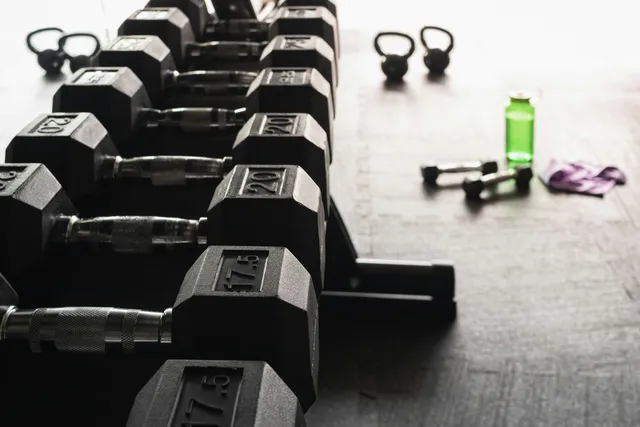
Thirty-seven sessions, at three a week. Twenty-five, if you train twice.
Now put that against what waiting buys you, and notice the asymmetry: the discount does not get bigger because you waited longer. Whatever is offered on the twenty-seventh of November is offered to the person who decided that morning and to the person who has had the tab open since August, identically. Waiting is not an investment that accrues. It is a gap.
That makes this a strange trade. You are paying a cost that scales with time, for a benefit that does not.
And the sale is already running
The second half of the arithmetic is the part most people get wrong, because it quietly assumes today’s price is the undiscounted one.
On 1 September 2026 we read every listing on page one of five home gym searches — adjustable dumbbells, resistance bands, exercise bikes, suspension trainers, adjustable kettlebells — and counted, by hand, how many were already showing a price below a struck-through reference.
Eighty-four out of two hundred and thirty-four. More than a third of the aisle, discounted on an ordinary Tuesday nearly three months out. Forty of those eighty-four carried a badge reading Limited time deal, which is a scarcity label sitting on one listing in six on a day when nothing whatsoever was happening.
This changes what you are actually comparing. The number that decides whether to wait is not the Black Friday discount. It is the difference between the Black Friday discount and the one you can already have today. If something shows eleven percent off in September, then a twenty percent November price is a nine point improvement — and you paid thirty-seven sessions for it.
Where waiting is defensible, and where it is not
Not everything behaves the same way, and pretending otherwise would be the easy version of this article.
The honest split runs along one line: how big the number is that the percentage gets applied to. A fifth off something cheap is a rounding error against a quarter of a year of training. A fifth off the most expensive thing in the room is a real sum, and a real sum is worth some inconvenience.
So the rule that falls out is not “wait” or “do not wait”. It is:
- Anything that fits in a drawer, buy now. Bands, straps, a single bell. The absolute saving cannot be worth twelve weeks, whatever the percentage says.
- Anything mid-sized, buy now unless you were undecided anyway. A dumbbell pair sits here. If you already know which one, the deciding is done and the waiting is pure cost.
- A machine, wait if you like. This is where the percentage lands on a number large enough to matter, and where the discounting is deepest and most frequent anyway.

There is a second, quieter reason the small things should not wait, and it has nothing to do with money. Equipment that arrives in September gets used in September. Equipment that arrives on a December doorstep arrives into the least consistent four weeks of the year, in a house full of other things, and a fortnight later it is a January resolution rather than a habit. The single biggest predictor of whether a home gym gets used is not what you bought — it is how little friction stands between you and a set. A delivery date in the middle of the holidays is friction.
The verdict
If you are going to buy one thing before the end of the week, buy the one where waiting is most obviously irrational: the cheapest item on this site, with the largest owner sample behind it.
On the check date it was already discounted, and against Amazon’s own recent-price figure rather than a manufacturer’s list price — which is the harder of the two to inflate, and something taken apart in what actually moves in a home gym sale.
Buy this now, not in November
WHATAFIT Resistance Bands Set
- Bands
- 10, 20, 30, 40, 50 lb
- Stacked
- Up to 150 lb
- Includes
- Door anchor, ankle straps
- Impact load
- None
What we like
- 36,449 ratings — by a wide margin the largest owner sample in this catalogue, and owner reporting is what this site ranks on
- Stacks to a genuinely useful load and includes a door anchor, so it needs no drilling and no floor
- The absolute saving from waiting twelve weeks cannot rationally exceed twelve weeks of training
- Already discounted on the check date, against a typical price rather than a list price
What we don't
- Sold by a third party and shipped by Amazon, so a return runs through the seller rather than Amazon
- Natural rubber, so it ages on a calendar whether or not you use it
- The force curve is wrong at the bottom of a press, so it is not a permanent substitute for load
If you already train and bands are behind you, that verdict is not for you — read are resistance bands enough for where they stop, and take the field below instead.
The field, by what you are actually waiting for
| Product | What decides it | Best for | Buy |
|---|---|---|---|
| WHATAFIT Resistance Bands SetOur top pick | Stacks to 150 lb, no floor needed | Starting this week rather than next quarter | Check price → |
| TRX GO Suspension Trainer | 0.68 kg, rated to 700 lb | The lowest-friction thing you can own | Check price → |
| PowerBlock Sport 24 | 3-24 lb per hand, 3 lb steps | A first real load, finely stepped | Check price → |
| BowFlex Results Series SelectTech Dumbbells | 5-52.5 lb per hand, dial | The load ceiling being the actual problem | Check price → |
| Yes4All Spinlock Set | Screw collar, 40-200 lb total | Buying plain iron, which moves least of anything here | Check price → |
| BowFlex SelectTech 840 Kettlebell | 8-40 lb, six settings | One implement instead of two | Check price → |
| pooboo Magnetic Belt-Drive Bike | Belt drive, magnetic, 350 lb capacity | The one purchase where waiting is defensible | Check price → |
You have not started, and you are waiting to start properly
The equipment is not what is stopping you, and a discount will not start you. Buy the cheapest thing that produces a real session, this week, and let the purchase be small enough that being wrong costs nothing. If it turns out you train, November’s field will still be there and you will know far more about what you actually need than you do now.
Check the band set Check the straps insteadYou already train, and the load ceiling is the problem
Then you are not waiting for a sale, you are waiting to be sure. Those are different problems and only one of them has a date. Work out whether you need range or fine steps — that is settled in how much weight you actually need — and buy the answer. A dial pair is the wide-range option and a pin-selector pair is the fine-stepped one, and on the check date neither carried any discount at all.
Check the dial pair Check the pin-selector pairThe thing you want is the machine
Here the advice inverts, and this is the recommendation on the page that earns us least. Cardio was the most heavily and most frequently discounted category we measured, it is the largest number for a percentage to work on, and it is the one purchase where twelve weeks of patience can plausibly be worth more than twelve weeks of training. If you have already decided a bike is the answer, waiting is not laziness — it is the arithmetic running the other way. For the intervening weeks, cardio in a flat without a treadmill covers what to do with no machine at all.
Check the bike Check the bell for the meantimeWhat breaks, and who fixes it
Waiting has failure modes of its own, and none of them is about money.
The deal you waited for lands on a different item. Discounting is not spread evenly. The thing you chose in September may be the one item in its category that does not move, and you will then be choosing between the thing you researched and the thing that is cheap.
The variant on offer is not the one you read about. A discount attaches to a listing variant, not to a product, and under time pressure the variant selector is the control nobody re-reads. There is a whole page on that — the listing traps — and it is worth thirty seconds before you pay.
It arrives at the worst possible moment. A late-November order lands in the middle of the least consistent month of the year. What arrives in September gets a running start.
The seller is not who you think. Two items in this catalogue ship from an Amazon warehouse while being sold by somebody else, which decides who handles a return. That does not change in November, and the busy season is exactly when it starts to matter. The same problem, from the buying-for-someone-else end, is drawn out in buying a home gym as a gift.
Before you decide to wait: five checks, thirty seconds each
- Multiply your training week by twelve. That is the real cost, and it is the number that never appears in a deal round-up.
- Look at whether it is already discounted. More than a third of the aisle was, months out.
- Read what the discount is measured against. A struck-through list price and a struck-through typical price are different claims wearing the same clothes.
- Ask whether you are waiting for a price or waiting for certainty. Only one of those is fixed by a date in November.
- Check the Sold By line, not the Ships From line. That is your return path, in any month.
Questions people ask
Is home gym equipment actually cheaper on Black Friday? Some of it, by some amount, measured against a reference number the seller chooses. What we can say from a hand count on 1 September 2026 is that 36% of the listings we looked at were already discounted, that badges reading Limited time deal sat on one listing in six, and that the deepest cut anywhere that day was about a third off. The interesting number is not the November discount — it is the gap between it and what you can pay right now.
How much do I actually save by waiting? Only the difference between the two discounts, never the whole headline percentage. If an item shows ten percent off today and twenty in November, you waited eighty-seven days for ten points.
What should I never wait for? Anything small. Bands, straps, a single bell. The percentage may well be larger on those than on anything else, and the absolute amount still cannot be worth a quarter of a year.
What is genuinely worth waiting for? The most expensive item you were going to buy anyway — in this catalogue, the bike. Cardio was both the most frequently and the most deeply discounted category we measured, and it is the largest number for a percentage to work on.
Does the discount get better the longer I wait? No, and that is the whole point of the first chart. The cost of waiting accumulates. The discount does not.
Is it worth buying now and returning it if the price drops? Do not plan around that. Return windows run through whoever sold the item, and for two products in this catalogue that is not Amazon. Buy it because you want it, not as a bet on a price.
Is it better to buy second-hand instead of waiting? Sometimes, and it is a different trade with different risks — buying home gym equipment second-hand sets out which parts you can inspect and which hide their wear.
Sources and method. The discount counts come from page one of five Amazon searches read on 1 September 2026 — adjustable dumbbells, resistance bands, exercise bike, suspension trainer, adjustable kettlebell — 234 unique listings carrying a price, counted by hand. A listing counts as discounted when its price sits below a struck-through reference on the same card. The exercise bike sample was 19 listings, roughly a third the size of the others, and is the weakest figure here. The session arithmetic is a calendar multiplied by a training frequency, and is not an estimate. Product figures are published maximums read from the live listings on 1 September 2026. This site does not buy or use the equipment it ranks, and nothing here is ranked on anything we have personally handled.
Waited, and had it go differently? Tell us.
More on how these are put together in how we research, and the rest of the cluster in Strength Equipment.
Specifications here are checked against the live listing on the date shown, and figures we derive ourselves are labelled where they appear.
How we research →