Can You Ride an Electric Trike in the Rain?
Yes, and the rain is not what damages it. The published ingress tests put the strongest jet rating ever defined at 150 psi, and a domestic pressure washer at ten times that. The hose does the damage, not the weather.
This guide contains affiliate links. Buying through one costs you nothing extra and pays for the research. As an Amazon Associate I earn from qualifying purchases. How this site is funded →
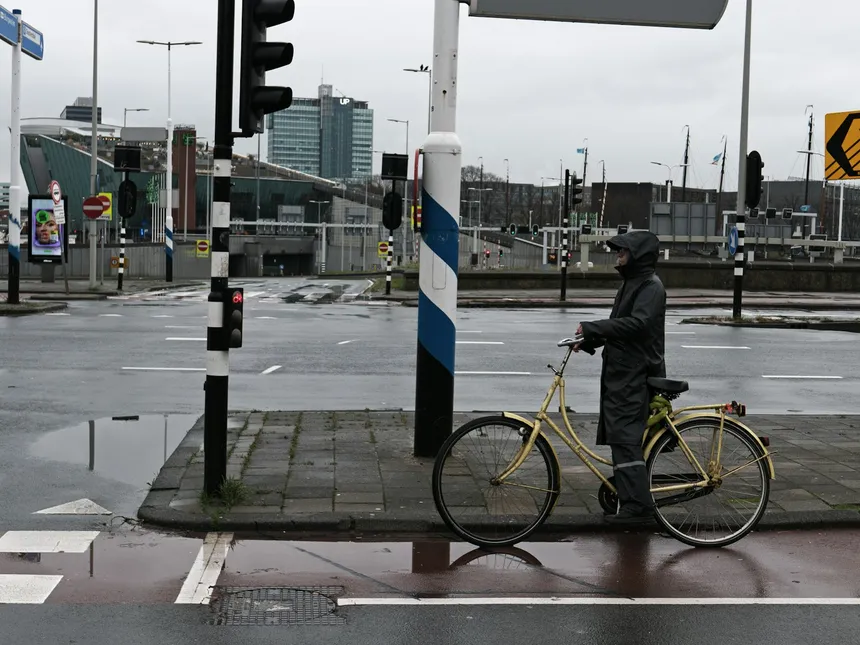
It started raining eight minutes from home and you had a decision to make with a battery under your seat.
You rode it. Of course you did. And then you spent the evening quietly wondering whether you had just done something expensive, because nobody sells you one of these with a straight answer about water, and the spec sheet says nothing at all.
Here is the short version, and then the part that actually matters. Riding it in rain is fine. What damages these machines is almost never the weather — it is the twenty minutes afterwards, when a well-meaning owner points a hose at it.
What this covers
Riding, parking and cleaning an adult electric trike in wet weather. Not fording, not submerging, and not a specific machine’s certification — almost nothing in this class publishes a tested IP rating at all, which is itself the first thing worth knowing.
The test conditions below are published standards. The braking argument uses published friction values against the roll-limit figure this site derived in the tipping guide.
What a weather rating is actually tested with
Ingress protection is defined in IEC 60529 and written as two digits — solids first, liquids second. When a rating is written IPX4, the X means the solids figure was never tested. That is already a signal about how seriously the number was taken.
The gap on that chart is the whole page.
IPX4 — the level most consumer electronics in this class claim — is a splashing test. An oscillating tube or a spray nozzle, ten minutes, no meaningful pressure behind it. That is rain. That is exactly rain, and it is what the rating exists to cover.
Go up the scale and the numbers appear. IPX5 is jets at 4.4 psi. IPX6 is powerful jets at 15 psi. IPX6K, the hardest jet test the standard defines, is 150 psi.
Now put a domestic pressure washer next to it: typically 1,500 to 2,000 psi. Ten times the strongest ingress rating that exists, and several hundred times the test a splash-rated machine actually passed.
Nothing on a bike or a trike is built for that. A pressure washer drives water past seals that were designed to shed it, straight into hub bearings, the motor cable gland and the charge port. It is the single most common way people destroy an electric bicycle, and it is done with the best of intentions on a sunny afternoon.
So what actually goes wrong in the wet
Three things, and only one of them happens while you are riding.
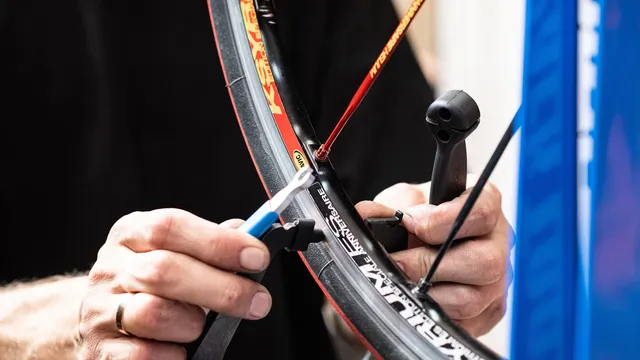
Water that sits. Rain that lands on a moving machine leaves it again. Water that pools in a charge port, in a display bezel or on the battery contacts does not, and that is where corrosion starts. The rule that follows is small and boring and it is most of the answer: shut the charge port cover, and never plug a charger into a wet port. Let it dry first.
Brakes that need warning. Wet rims and wet rotors both take a moment to bite, and on a three-wheeler you cannot shift your weight to compensate the way you can on two. Brake earlier than feels necessary, and use the first light squeeze of a stop to clear the water rather than to slow down.
The chain and the exposed steel. This is the ordinary bicycle problem and the maintenance guide covers it — a wet chain left wet is a rusty chain by the weekend.
Does rain make it less likely to tip?
This is the question people actually mean when they ask about riding in the wet, and the answer is uncomfortable.
The intuition is that a wet road means less grip, and less grip means the tyres let go before the machine rolls over — a slide instead of a tip. That is a real mechanism. It just does not happen at the numbers involved.
A treaded tyre on dry asphalt grips at around 0.7. Soak it and the published sliding values on wet bituminous concrete run 0.42 to 0.54, with wet sheet asphalt about 0.41.
The roll limit on these machines, from their published geometry, sits near 0.25.
Every wet-tarmac figure is still comfortably above it. So the machine still reaches its tipping point before the tyres let go — rain lowers the grip, but nowhere near far enough to change which failure comes first. The surfaces that genuinely fall under the threshold are painted road markings, metal covers and ice, and those are exactly the things you least want to be turning on.
Which means wet weather does not relax the cornering rule; it tightens it, because now you have patches on the road where the answer changes without warning. The tipping guide has the geometry in full.
The verdict
The most grip on the wettest surface
MoonCool FT1 Fat Tire Electric Trike
- Total width
- 30.7 in
- Wheelbase
- 51.2 in
- Seat height
- 30-40 in
- Max load
- 400 lb
What we like
- Widest track in the range at 30.7 in total width, and the longest wheelbase at 51.2 in
- Fat 4 in tyres put the largest contact patch on the road of anything here
- The best roll geometry of the four on our numbers, which is what wet cornering needs most
- Published geometry is unusually complete for this class, which is what lets us rank it
What we don't
- More grip means it is the model most likely to tip rather than slide — better geometry, worse failure mode
- Max load is 400 lb, 50 lb under the rest of the range
- The smallest trike pack here at 48V 14.5Ah, and 7 to 9 hours to charge
- Only 18 published reviews — ranked on specifications, not owner reports
The MoonCool FT1 takes this page on geometry rather than on any weather claim, because no machine in this class publishes a tested ingress rating worth ranking on. Widest track, longest wheelbase and the biggest contact patch is the combination that matters when the road is wet, and it is the one thing here that is actually documented.
The counter-argument belongs on the page rather than in a footnote: fat tyres grip harder, and a machine that grips harder is a machine that tips rather than slides. In the wet that trade moves in your favour. On dry tarmac it does not.
The field
| Product | Track and wheelbase | Best for | Buy |
|---|---|---|---|
| MoonCool FT1 Fat Tire Electric TrikeOur top pick | 30.7 in wide, 51.2 in base | Widest track, biggest contact patch | Check price → |
| MoonCool TK Pro Electric Trike | 28.4 in wide, 44.1 in base | A long base with a lower price | Check price → |
| MoonCool TK2 Pro Electric Trike | 27.6 in wide, seat to 36.2 in | Lowest seat, best against roll | Check price → |
| MoonCool TK2 Folding Electric Trike | 29 in wide, 36 in base | The shortest wheelbase here | Check price → |
| MoonCool POP Folding Electric Bike | Leans, so it slides | Two wheels — a different problem entirely | Check price → |
You will ride in the rain regularly and the roads are ordinary tarmac
Buy the widest track and the longest wheelbase you can, and treat painted lines and drain covers as the hazard rather than the rain itself.
Check the FT1 Check the TK ProYour worry is tipping, wet or dry
Then the seat height matters more than the tyre. The lowest seat ceiling in the range does more for roll stability than any amount of rubber, and the wet does not change that ranking.
Check the TK2 Pro Check the FT1You can still balance a bicycle
Then a two-wheeler is genuinely the safer machine in the wet, because it can lean and it slides before it does anything worse. The trike solves a balance problem, and if you do not have one it is solving something you do not have.
Check the two-wheeler Check the folding TK2What breaks, and who fixes it
Water damage on these machines is slow and it is almost always traceable to one of three habits.
Pressure washing. Covered above, and it is the big one. A garden hose on a gentle setting, a bucket and a brush are the whole approved toolkit. Never aim anything at a hub, a bearing, the motor cable where it enters the frame, or the charge port.
Charging wet. A charge port with water in it is a short circuit waiting for you to complete it. Dry the port, then charge — and charge indoors, which the battery guide argues for on completely separate grounds.
Parking wet under a cover. A cover over a soaking machine traps the water against it rather than shedding it. Let it drip dry first, then cover it. The storage guide covers the cover-size trap — the sizes are named by number of bikes, and a trike needs the 2-bike size.
Returns and warranty: these machines are sold direct by the manufacturer, so a water-damage claim, a spare part and a return all run through the same company. Worth knowing before you find out.
Before you buy: five checks, thirty seconds each
- Ask the seller for the IP rating in writing. If the answer is vague, that is the answer — assume splash-rated and behave accordingly.
- Find the charge port and check it has a cover that actually closes. It is the most vulnerable opening on the machine.
- Look at where the motor cable enters the hub. That gland is the second most vulnerable point, and it is the one a pressure washer finds first.
- Decide now that you will never pressure wash it. Published ratings top out at 150 psi; the machine typically starts at ten times that.
- Check the mudguards. Riding wet is fine. Arriving covered in road spray is a separate problem that a fitted guard solves and a rating does not.
Questions people ask
Can you ride an electric trike in the rain? Yes. Rain is a splashing exposure, which is exactly what the common IPX4 rating is tested against. Riding in it is not the risk on these machines.
Are electric trikes waterproof? No, and almost none of them publish a tested rating at all. Water-resistant to rain is a fair assumption; immersion and pressure jets are not, and there is a large published gap between the two.
Can I wash my electric bike with a pressure washer? Don’t. The strongest jet test the ingress standard defines is 150 psi, and a domestic pressure washer typically runs 1,500 to 2,000. It is the most common way people destroy the electrics on one of these.
Is a wet road more or less likely to tip a trike? Less grip means less cornering force, but the numbers do not go far enough to help: wet tarmac still grips at roughly 0.41 to 0.54 against a roll limit near 0.25, so it still rolls before it skids. Painted lines and metal covers are the surfaces that change the answer.
Can I leave it outside in the rain? The machine can take weather far better than the pack can. If the battery comes off, bring it in — the published storage window for lithium is 15 to 25 °C, which is a house, not a driveway.
What should I do after riding in the rain? Wipe the charge port and shut its cover, dry the chain and re-lube it, and let the machine dry before covering or charging it. That is genuinely the whole list.
Sources and method. Ingress protection test conditions are from IEC 60529 as summarised in published ingress-testing guidance — IPX4 splashing for 10 minutes, IPX5 at 4.4 psi, IPX6 at 15 psi, IPX6K at 150 psi, IPX7 immersion to 1 m for 30 minutes (Keystone Compliance, IPX rating chart), read 2026-09-02. Tyre friction values are from the road-friction literature: sliding coefficients for treaded tyres on wet bituminous concrete of 0.42 to 0.54 and wet sheet asphalt about 0.41 (TRB proceedings), with the general dry-versus-wet range for a treaded tyre of roughly 0.7 to 0.4 (tyre friction coefficients).
The 1,500 to 2,000 psi pressure-washer figure is a general typical value, not a standard, and is labelled that way on the chart. The 0.25 roll limit is ours, derived from published geometry in the tipping guide. Machine geometry and battery specifications are the manufacturers’ own published figures, read 2026-08-29. This category is ranked on published specifications rather than owner reports, because review counts across the range run from 2 to 67.
If a machine of yours has taken water damage, tell us — where it got in is the detail this page most wants.
More on how these are put together in how we research, and the rest of the cluster in Electric Trikes.
Specifications here are checked against the live listing on the date shown, and figures we derive ourselves are labelled where they appear.
How we research →