How Hard Is an Electric Trike to Assemble?
The build is about an hour with the tools in the box. The part nobody warns you about is the lift: the published net weight is 99 lb, and the NIOSH equation puts the recommended limit for that particular movement near 20.
This guide contains affiliate links. Buying through one costs you nothing extra and pays for the research. As an Amazon Associate I earn from qualifying purchases. How this site is funded →
The listing says “85% assembled” and you have decided to believe it, because the alternative is admitting you have no idea what arrives.
What you are actually picturing is an evening with an allen key and a diagram, and a moment near the end where something does not line up. That is the part you are nervous about.
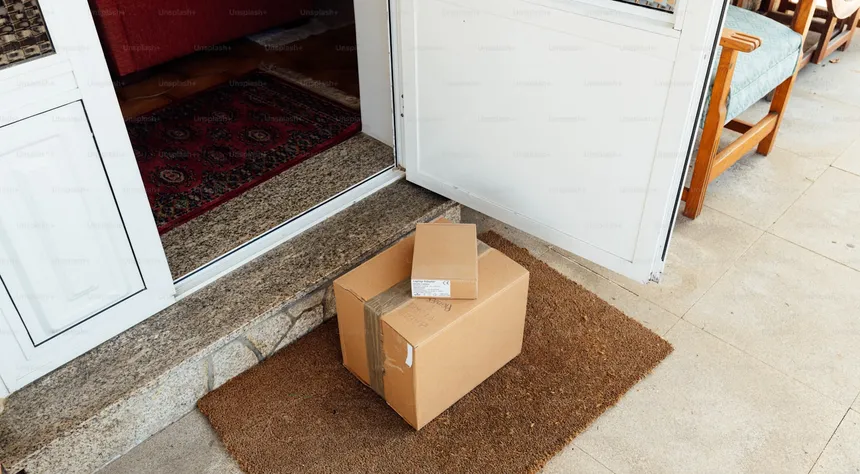
It is not the part you should be nervous about. The build is genuinely short — bars, front wheel, pedals, seat, basket, an hour if you are unhurried. The problem is forty minutes earlier, when a carton the size of a door is sitting in your driveway with 99 pounds in it and the driver has already left.
What this covers
Taking delivery of an adult electric trike and getting it road-ready. Not a specific model’s instructions, and not a workshop manual — what this page can do is tell you which parts of the job are real, which are not, and which ones you should not sign off yourself.
The weights and dimensions below are the makers’ published figures. The lifting limit is the published NIOSH equation, applied to this particular movement.
The lift, in numbers
Every machine in this class publishes a net weight of 45 kg. That is 99 lb, and the carton adds to it.

There is a published way to think about that. The revised NIOSH lifting equation starts from a load constant of 51 lb — the maximum recommended weight for a two-handed lift under ideal conditions: hands close to the body, near knuckle height, no twisting, infrequent, with something good to grip.
Unboxing a trike breaks every one of those conditions simultaneously, and the equation has a multiplier for each.
Start the lift at floor level rather than knuckle height and the recommended limit falls to about 40 lb. Reach twenty inches out to clear a carton wall and it falls to about 20.
Against 99 lb of machine. Roughly five times the recommended limit for that exact movement.
So the answer to “can I do this alone” is not a matter of how strong you are. Have a second person there when it is delivered. Not as a precaution — as the arithmetic. And if the honest answer is that nobody will be available, that is worth knowing before you order rather than at the kerb.
This is the same published weight that makes wall hooks and hoists impossible for storage and makes a return a freight shipment rather than a parcel. The 99 lb figure decides more about ownership than any other number on the spec sheet.
Do not throw the box away
This is the cheapest advice on the page and the one most people ignore within the hour.
These machines are sold direct rather than through a retailer, and the published refund policy on the range this site tracks runs 30 days from receipt, requires email authorisation first, the original packaging, an unused machine — and on a change of mind, the buyer pays the freight.
Which means the carton is part of the purchase for a month. Break it down flat, slide it behind something, and keep the foam and the corner protectors with it. A machine that cannot be repacked is a machine that cannot go back, whatever the policy says.
The steps that matter, and the ones that do not
Assembly anxiety attaches itself to the wrong things. The fiddly jobs are visible; the dangerous ones are not.
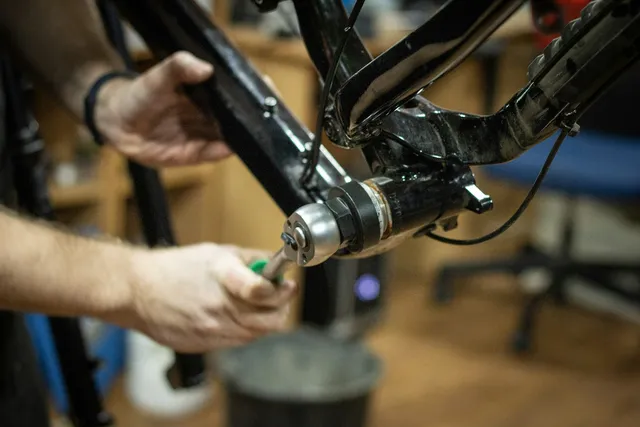
A basket fitted badly announces itself immediately. A display cable routed carelessly will annoy you until you redo it. Neither can hurt you.
Three jobs can, and they share a property: they look exactly the same when they are right and when they are wrong.
The front axle and its nuts. The wheel spins either way. It only matters under braking.
The stem clamp. A handlebar that is not properly clamped feels normal until the moment you put weight through it.
The brake calipers. A caliper that is rubbing is obvious. A caliper that is barely engaging is not, and you find out at a junction.
Two more deserve a mention because they catch first-time builders specifically. The left pedal has a reversed thread — it tightens anticlockwise, and forcing it the usual way strips a crank arm that is not cheap to replace. And the seat post has a minimum insertion mark; on a machine with a seat range of 30 to 42 in it is tempting to pull the post right up, and past that mark the post is a lever rather than a support.
What you should not sign off yourself
Here is the position this page will actually take, and it is not the one that sells the most accessories.
If you have never set up a bicycle brake, get the brakes and the front end checked by a bike shop before the first proper ride. Most will do a safety check on an owner-assembled machine for very little, and it takes twenty minutes.
That is not a comment on anyone’s competence. It is that the three jobs in the last column of that chart give no feedback when they are wrong, and one of them is the thing that stops a 99 lb machine carrying a rider down a hill — which is a bigger question than the motor that got you up it.
The verdict
The one most likely to fit through the door it has to be built in
MoonCool TK2 Pro Electric Trike
- Total width
- 27.6 in
- Wheelbase
- 43.3 in
- Seat height
- 29.5-36.2 in
- Max load
- 450 lb
What we like
- Narrowest in the range at 27.6 in total width, so it can be built inside and taken out
- Published folded dimensions of 39.4 x 28.7 x 26.8 in, which tells you the space the job needs
- Lowest seat ceiling in the range at 36.2 in — less temptation to run the post past its mark
- Published geometry is unusually complete, which is what makes any of this checkable
What we don't
- Still 99 lb, and no machine in this class is a one-person unboxing
- The most expensive machine in the range
- Only 20 published reviews — ranked on specifications, not owner reports
- Sold direct, so a missing part is a support ticket rather than a trip to a shop
The MoonCool TK2 Pro wins this page on the one assembly variable a buyer can control: where the job happens. At 27.6 in total width it is the only machine here that will comfortably clear a 30 in door once built, which means it can be assembled indoors, in the warm, with the parts on a floor rather than on wet tarmac.
The field
| Product | Total width, built | Best for | Buy |
|---|---|---|---|
| MoonCool TK2 Pro Electric TrikeOur top pick | 27.6 in, 99 lb | Building indoors and getting it out | Check price → |
| MoonCool TK Pro Electric Trike | 28.4 in, 99 lb | A near-miss on a 30 in door | Check price → |
| MoonCool TK2 Folding Electric Trike | 29 in, 36 in wheelbase | The shortest machine to manoeuvre | Check price → |
| MoonCool FT1 Fat Tire Electric Trike | 30.7 in, 70.9 in long | Widest, so it is built where it lands | Check price → |
| MoonCool POP Folding Electric Bike | Folding, lightest here | Two wheels, and by far the easiest build | Check price → |
Nobody will be there on delivery day
Then buy the machine one person can actually deal with, and that is not a trike. The two-wheeler in the same range is the only one here that a single person can reasonably unbox and move, and it folds.
Check the two-wheeler Check the folding TK2You have help, and you want to build it indoors
Then width is what decides whether that is possible. Measure your narrowest doorway first, subtract about two inches for the frame and the open leaf, and buy inside that number.
Check the TK2 Pro Check the TK ProIt will be built in a garage and stay there
Then width stops mattering and geometry takes over. Buy the widest track and longest wheelbase you can, because you are no longer trading stability for a doorway.
Check the FT1 Check the TK ProWhat breaks, and who fixes it
The failures traceable to assembly are a short and predictable list: a loose stem, an axle nut that was never brought up to torque, a brake that was set with the wheel out of the dropout, and a crank arm stripped by a left pedal.
None of them is exotic and all of them are found by a twenty-minute safety check.
Missing parts are the other common delivery-day problem, and they run through the manufacturer rather than a shop, because these are direct sales. Open the box, check the parts against the list before you start, and photograph anything damaged in transit while it is still in the packaging — that photograph is what a claim runs on.
Torque figures: if the machine ships without them, ask. “Firm” is not a specification, and a handlebar clamp is the wrong place to develop a personal standard.
Before you buy: five checks, thirty seconds each
- Arrange a second person for delivery day. The published weight is 99 lb and the recommended limit for that lift is nearer 20.
- Measure the narrowest door on the route and subtract two inches for the frame. That decides whether the build can happen indoors.
- Ask whether the machine ships with torque figures and with the tools. Both are normal; the absence of either is worth knowing first.
- Plan where the carton lives for 30 days. The return window needs it, flat, and it is the size of a door.
- Book the safety check before you build, not after. A shop slot two days out is what turns a first assembly into a finished machine.
Questions people ask
How hard is it to assemble an electric trike? The build itself is straightforward — bars, front wheel, pedals, seat and basket, around an hour. The difficulty is the 99 lb lift out of the carton, which is a two-person job by the published lifting arithmetic.
Can one person assemble an electric trike? One person can do the assembly. One person should not do the unboxing. The NIOSH load constant is 51 lb under ideal conditions, and lifting from floor level over a carton wall puts the recommended limit near 20.
How long does it take? Budget an evening rather than an hour, and most of the extra is unpacking, checking parts against the list and adjusting the seat and bars to fit you.
What tools do I need? Typically the allen keys and spanner in the box, plus a pump. A torque wrench is the tool that turns a guess into a specification, and it is the one worth borrowing if you do not own one.
Do I need a bike shop? For the brakes and the front end on a first build, yes, and it is cheap. Those are the three jobs that look finished when they are wrong.
Should I keep the box? For 30 days at least. The published return policy needs the original packaging, and on a change of mind the buyer pays the freight — so a machine that cannot be repacked cannot practically go back.
Sources and method. Net weights, folded dimensions and geometry are the manufacturers’ own published specifications, read from the spec tables on 2026-08-29; the refund terms — 30 days from receipt, email authorisation, original packaging, unused, buyer-paid freight on a change of mind — were read from the seller’s own published policy on 2026-09-01. The lifting figures come from the revised NIOSH lifting equation, whose imperial form uses a 51 lb load constant under ideal conditions with a vertical multiplier of 1 − 0.0075|V − 30| and a horizontal multiplier of 10/H (NIOSH lifting equation guide), read 2026-09-02.
Applying that equation to an unboxing is ours, and the caption says so. The step classification — cosmetic, annoying, can hurt — is ours as well. This category is ranked on published specifications rather than owner reports, because review counts across the range run from 2 to 67. This site does not buy, build or use the machines it ranks, which is exactly why this page tells you to have the brakes checked rather than describing how to set them.
If a delivery went differently — a kerbside drop, a missing part, a machine that arrived built — tell us.
More on how these are put together in how we research, and the rest of the cluster in Electric Trikes.
Specifications here are checked against the live listing on the date shown, and figures we derive ourselves are labelled where they appear.
How we research →